

 Sonder Bikes


Outdoor gear needs proper cleaning. Our guide helps you wash merino, down, and waterproofs to keep them fresh and extend their usefulness.
From waterproofs and merino wool to down, tents and wetsuits, cleaning and looking after your outdoor clothing and gear is really important if you want it working better for longer. And it can be easy.
Overview
- Why do I need to take care of my outdoor kit?
- Building a basic care kit
- How do I take care of waterproof kit?
- How do I look after Merino wool kit?
- How do I take care of down jackets and sleeping bags?
- How do I take care of my tent?
- How do I take care of my sleeping mat?
- How do I take care of my wetsuit?
- How do I take care of my boots?
- How do I look after sports kit/everything else?
- How should I store my gear between trips and seasons?
- Should I repair it or replace it?
- FAQs
Why do I need to take care of my outdoor kit?
Reduce, reuse, repair, recycle. It's not a slogan for us, it's how we design: from the first sketch to the final stitch, we ask whether something will last, whether it can be fixed, and where it ends up when it's genuinely done with. Keeping and using our gear for longer cuts the environmental impact of manufacturing, production and delivery, and the pressure on the people who made it. We want to make gear you'll love for longer, and repair it when it needs it.
Alpkit gear is built to be used, not babied. But it still needs looking after: wash it before it gets too far gone, patch it up when it's had a fall, and keep it going for as long as it keeps you happy. When it genuinely can't go on, pass it on via our Continuum Project instead of the bin.
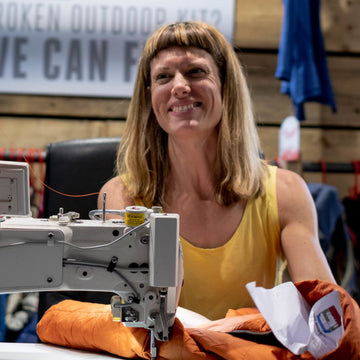
Take a look inside our Repair Station above, and see the difference proper care makes over the life of a piece of gear.
Building a basic care kit
Most of what you need covers more than one category, so it's worth having it in the cupboard rather than buying piecemeal every time something needs attention:
- A technical wash (Nikwax Tech Wash or Grangers) for waterproofs and other technical layers. Never standard laundry detergent, it works against the DWR coating.
- A reproofer, wash-in or spray-on, for whenever washing alone stops bringing the beading back.
- A down-specific wash, separate from your technical wash, for down jackets and sleeping bags. Ordinary tech wash can strip the natural oils that keep down performing.
- Repair patches and glue, self-adhesive patches for waterproof fabrics, neoprene glue if you own a wetsuit. Most self-inflating sleeping mats already come with their own small repair kit in the box.
- A leather conditioner, if you've got leather boots. Not needed for anything else, but essential for keeping leather from drying out and cracking.
That's it. Five products cover almost everything in your kit bag. If you'd rather skip the shopping list entirely, our Repair Station stocks and applies all of it for you.
Caring for your waterproof clothing and equipment

Why you need to wash your outdoor gear
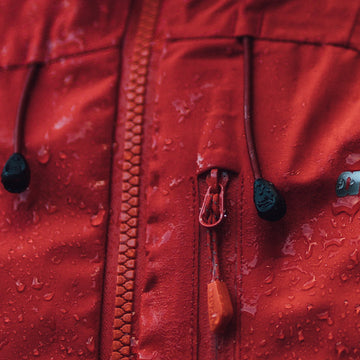
Keeping your waterproofs, well, waterproof is all about proper care. This isn't complicated, buy you shouldn't just chuck it all in the washer like any old laundry. Standard detergent is full of composition-breaking chemicals which might ruin the waterproof membrane of your favourite jacket, so you should use a tech wash, like Nikwax or Grangers.
Sound all a bit too stressful? Then, send your beloved waterproofs to the Alpkit Laundry and get them delivered back to you squeaky clean.
Reproofing
Every now and then, waterproof kit needs a bit of TLC to keep working at its best. We’ve recently been working hard to get rid of nasty chemicals in our waterproof kit. This is great! But it does mean that they need reproofing more often. If you don’t know when or how to reproof your waterproof kit, a good sign is when the water is no longer beading on the surface of your kit.
Repairing
If you’ve stumbled over a particularly spiky rock and got a snag in your beloved waterproofs, you need to patch that up! Stormsure Tuff Patches are self-adhesive waterproof patches. They can fix small holes in your waterproof kit to keep you nice and dry.
How to fix a hole in a waterproof jacket
- Make sure that the surface of your waterproof coat is clean and dry.
- Lay the waterproof on a flat surface and peel the backing off the Stormsure patch.
- Place the patch on top of the rip and allow 15 minutes to dry.
We have tested these repair patches on a range of fabrics (drybags, tent ground sheets, breathable waterproofs anything really). The repaired products have been put through washing machines, used in high abrasion areas and they work a treat.
The patches are as easy as using cellotape - as long as the surface is clean and dry (a fleece sleeve works great!) just take the back cover off and apply pressure over it.
Leave it for 15 mins, just enough time to make a brew or play a game of tag and then it should be stuck enough to carry on. After 30 mins to an hour it will be well stuck on.
Although this gives a very durable repair, you may also want to consider our professional Repair Station service. We can apply a more permanent heat-sealed patch at a low cost. We've run a repair service since 2004, in store, on any brand, and fixed 12,657 items last year alone.
Caring for your Merino wool clothing

Washing merino wool clothing
The better you look after your Merino wool garment, the better it will look after you. And if we love our products for longer, we can do our bit for the environment and keep that circular economy going. Avoid snagging, vigorous machine washing, putting your finger through the fabric, and hungry moths.
Repairing merino wool clothing
Darn any holes as soon as possible so they don’t grow. If you’re not too handy with a needle and thread, then you can send your Merino kit (Alpkit or otherwise!) to our Repair Stations, available in all stores.
Caring for your down sleeping bag and jacket

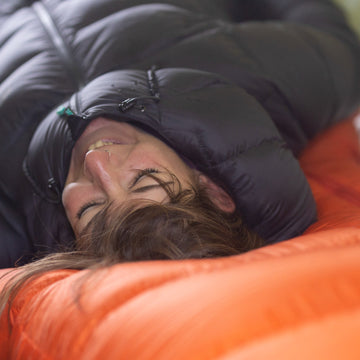
Dirty down isn't as effective as clean down. It's the pockets of air trapped between the feathers that keep you warm, so when it gets dirty and clumps together, it can't loft properly and loses warmth. Wash it once it starts smelling or losing loft. Special down washes, like Nikwax or Grangers, do the job without stripping the natural oils that keep the down performing.
We also provide a down wash service at our Ambleside store. Keep your down products fluffy with our professional down cleaning service.
Caring for your tent
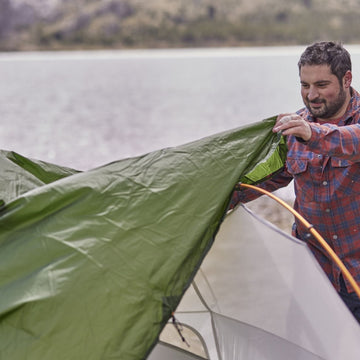
A tent takes more punishment than almost anything else in your kit bag: ground grit, condensation, UV, the odd guy-line snag. Never pack it away wet if you can help it, and never clean it with anything stronger than lukewarm water and a soft sponge. Our full tent care guide covers cleaning mould, drying it properly and storing it so the fabric and coatings last.
Caring for your sleeping mat
Self-inflating mats look after themselves more than most gear, but a few habits make a real difference: opening the valve fully before you roll it up, storing it unrolled or loosely rolled rather than stuffed tight, and keeping the valve free of grit. Our sleeping mat care guide has the full first-use and long-term care steps.
Caring for your wetsuit
Neoprene has its own rules: rinse it in fresh water after every swim, dry it inside out away from direct sun and heat, and store it flat or on a wide hanger rather than folded, which creases and weakens the neoprene over time. Our wetsuit care and repair guide covers cleaning, storage and patching small tears yourself.
Caring for your boots
A well-kept leather boot can outlast several pairs of the cheap alternative: clean off mud and grit after every walk, condition the leather periodically so it doesn't dry out and crack, and reproof it once water stops beading. Our leather and fabric boot care guide covers the full routine, including when it's actually time to replace a pair rather than keep patching it.
What about everything else?

The premise is the same. Keep it going for as long as possible. Don’t let the holes grow. And keep it clean. Polygiene™ treated products can go a little longer between washing, but otherwise stick to the rules: wash them cold and don’t use fabric conditioner.
Storing gear between trips and seasons
How you store gear between uses matters almost as much as how you clean it, and the same handful of rules apply across everything in your kit bag:
- Dry it fully before you put it away. Damp gear grows mould and odour, and natural fibres like down and merino are the quickest to suffer.
- Keep it out of direct sun and heat. UV degrades fabric and DWR coatings over time, and direct heat cracks leather and warps synthetic materials. A garage or shed with big temperature swings is nearly as bad as leaving something outside.
- Don't store insulation compressed. A stuff sack is fine for a trip, but leaving a down jacket or sleeping bag stuffed tight for months at a time damages the loft. Store them loose, or in a large cotton or mesh storage sack instead.
- Leave valves and zips cracked open on sleeping mats and tents. It stops trapped moisture building up and lets the material breathe between trips.
Beyond that, the details are category-specific, covered in each guide above, but those four rules cover most of what actually shortens gear's life in storage.
Repair or replace? How to tell
Not everything is worth fixing, but most things are worth fixing before you assume otherwise:
- Cosmetic damage, a scuff, a faded panel, a bit of pilling, doesn't need anything. Keep using it.
- Small structural damage, a tear, a snapped buckle, a stuck zip, is almost always cheaper and quicker to repair than replace. Left alone, small damage becomes big damage.
- Damage to something safety-critical, a tent that's stopped being waterproof, a sleeping bag that's lost most of its loft, is worth a proper assessment rather than a DIY patch. That's what the Repair Station is for.
- Genuinely done is rarer than it feels. If something really has reached the end, send it to us through Continuum rather than the bin. We'd always rather fix your gear than sell you new gear, and if we can't fix it, we'll make sure it doesn't go to landfill either.
FAQs
Can I use the same detergent on all my outdoor gear?
No. Waterproofs and down need a dedicated technical wash such as Nikwax or Grangers, never standard detergent or fabric softener, which strip the DWR coating and down's natural oils. Merino wool needs a gentler wash and lower temperatures to avoid shrinking. Wetsuits shouldn't go near a washing machine or detergent at all, just a cold fresh water rinse.
How often should I do a full gear care check?
The end of a season is the natural moment, before you put things away for a few months. Wash everything that needs it, check for damage while it's clean and you can actually see it, reproof anything that's stopped beading, then store it properly rather than leaving it stuffed in a bag until next time.
Is it worth repairing gear that wasn't expensive to begin with?
Usually, yes. Most repairs cost a fraction of replacing something outright, and our Repair Station fixes gear from any brand regardless of what it originally cost. It's also the single biggest thing you can do to cut the environmental impact of what you own, keeping it out of landfill and out of the production cycle for a replacement.
What's the single best thing I can do to make my gear last longer?
Wash it. It sounds backwards, but dirt, salt and body oils are usually what stop waterproof coatings and down insulation working properly, more often than the coating or the down itself failing. A proper wash before you assume something's broken solves more problems than reproofing or repair ever will.
Your next reads