

 Sonder Bikes


What actually makes a waterproof jacket waterproof? Understand membranes, hydrostatic head, breathability ratings and why the technology inside the fabric matters.
Buying a waterproof can feel like learning a new language. But knowing how breathable waterproof fabrics work helps you decide which one to buy and how to look after it and extend its life.
In this guide
- What is hydrostatic head?
- What waterproof rating do I need?
- What membrane technology is used in waterproof jackets?
- What is moisture vapour transmission rate?
- What breathability rating do I need?
- Why is my waterproof jacket wet inside?
What is hydrostatic head?

The hydrostatic head (HH) rating tells you how much water pressure your jacket can handle before it lets water in. It's measured using a column of water pressed against the fabric. The value signifies the height of water required to force liquid through. We recommend a minimum of 10,000mm HH for most activities, or at least 20,000mm for proper all-weather use. Alpkit's waterproofs range from 10,000 to 30,000mm.
What waterproof rating do I need?

Generally, the more demanding your use, the higher the hydrostatic head you'll need. Rucksack straps are worth factoring in: they press against the fabric and concentrate water pressure in a localised area. If you regularly carry a heavy pack, a higher-rated jacket pays dividends on sustained wet days.
What membrane technology is used in waterproof jackets?
The membrane is a thin film bonded to the inside of the outer fabric. It does the core work: stopping liquid water getting in while allowing water vapour from your body to escape. Pores or molecular pathways allow water vapour to pass through, but liquid water droplets cannot.
There are three main approaches used across the outdoor industry.
Microporous PU membranes
This is the approach used in Alpkit waterproof jackets. A thin layer of polyurethane (PU) is formed into a structure containing millions of microscopic pores. These pores are far too small for liquid water droplets to pass through, but large enough for water vapour molecules to escape. Rain stays out. Sweat can get out.
Microporous PU delivers strong waterproofing and breathability numbers, works well with modern PFC-free DWR treatments, and avoids the fluoropolymer chemistry associated with PTFE-based alternatives. It is the most widely used membrane technology in the industry because it offers a well-balanced combination of performance, environmental profile, and cost.
ePTFE membranes
Expanded polytetrafluoroethylene (ePTFE) is most widely known through the Gore-Tex brand and works on the same microporous principle. Tiny pores block liquid water while allowing vapour through. The performance is high across a range of conditions. You can read more about why Alpkit don't use Gore-Tex.
Hydrophilic membranes
Rather than relying on physical pores, hydrophilic (or monolithic) membranes use a solid polymer structure that transports moisture through chemical absorption. Water vapour is drawn into the membrane and passed through it along molecular chains, driven by the humidity difference between inside and outside. There are no pores to clog over time.
This approach is good in waterproof footwear via Sympatex, where consistent long-term performance matters as much as the initial numbers. It is not the approach used in our jacket range, in clothing, the mechanical simplicity and environmental profile of microporous PU is the better fit.
What is moisture vapour transmission rate?

Moisture Vapour Transmission Rate (MVTR) measures how much water vapour a fabric can pass in a given period. It is expressed in grams per square metre per 24 hours (g/m²/24hrs). The higher the number, the more breathable the fabric.
What breathability rating do I need?
We recommend the following guidelines for MVTR:
- 8,000 is suitable for low-intensity or sedentary use
- 10,000–15,000 is breathable enough for most activities where you expect to sweat — hillwalking, cycling, trail running at moderate pace
- 20,000+ is excellent for high-intensity activities where you're working hard and generating significant heat
Don't get hung up on the numbers
MVTR is a useful guide but an imperfect one. There are multiple test methods and manufacturers typically quote the most favourable result for their fabric. Comparisons between brands aren't always like-for-like. Real-world breathability is also affected by factors the lab can't fully replicate: humidity, temperature differential, how hard you're working. The numbers are a starting point, not a verdict.
Why is my waterproof jacket wet inside?

If moisture can't escape through your jacket fast enough, it accumulates on the inside and feels wet. The moisture you produce when exercising needs somewhere to go. The most waterproof jacket in the world won't be comfortable if it isn't also breathable. Several things can reduce effective breathability in the field.
Humidity
Breathability depends on a humidity differential — vapour moves from the wetter side (inside the jacket) to the drier side (outside). When ambient humidity is very high, that differential narrows and the jacket feels less breathable. This is a physical limitation of the technology, not a product fault.
Air permeability
Some jackets have an air permeability rating, meaning the fabric allows a small amount of air through. This can improve real-world comfort even if the MVTR figure is lower than a fully sealed fabric, because direct airflow supplements vapour transport. Neither approach is universally better — it depends on your activity and conditions.
Features
Pockets add a second layer of fabric against your body and can reduce localised breathability. Some jackets use mesh-backed pockets specifically to allow heat dumping through the zip — useful for high-output activities where you need to vent quickly.
Dirt and abrasion
A failed DWR treatment is the most common cause of a jacket feeling wet inside. When the outer fabric wets out (absorbs water rather than shedding it), it reduces the effective breathability of the whole construction. The fix is usually a wash and reproofing, not a new jacket. See our guide to reproofing your waterproof.
Related guides
- How to choose a waterproof jacket — ratings, construction types and features matched to activities
- Making responsible choices when buying a waterproof — sustainability, longevity and what to ask before you buy
- Gore-Tex vs Sympatex in walking boots — how hydrophilic membranes compare to microporous in footwear
- Why Alpkit don't use Gore-Tex
- How to reproof your waterproof jacket
- How to clean and care for outdoor clothing
100% PFC-Free Outdoor Clothing
-
New
![Balance [Mens]](http://alpkit.com/cdn/shop/files/balance-mens-2025-reef.jpg?v=1764160608&width=768)
![Balance [Mens]](http://alpkit.com/cdn/shop/files/Balance-mens-1.jpg?v=1767019620&width=768)
-
New
![Balance [Womens]](http://alpkit.com/cdn/shop/files/balance-womens-2025-black.jpg?v=1764160433&width=768)
![Balance [Womens]](http://alpkit.com/cdn/shop/files/Balance-womens-3.jpg?v=1765272052&width=768)
![Fortitude [Mens]](http://alpkit.com/cdn/shop/files/fortitude-mens-2025-alder.jpg?v=1763659494&width=768)

![Fortitude [Womens]](http://alpkit.com/cdn/shop/files/fortitude-womens-2025-alder.jpg?v=1763659499&width=768)

![Definition [Mens]](http://alpkit.com/cdn/shop/files/Definition-men-2.jpg?v=1760030579&width=768)

![Definition [Womens]](http://alpkit.com/cdn/shop/files/Definition-women-3.jpg?v=1764162500&width=768)
Definition [Womens]
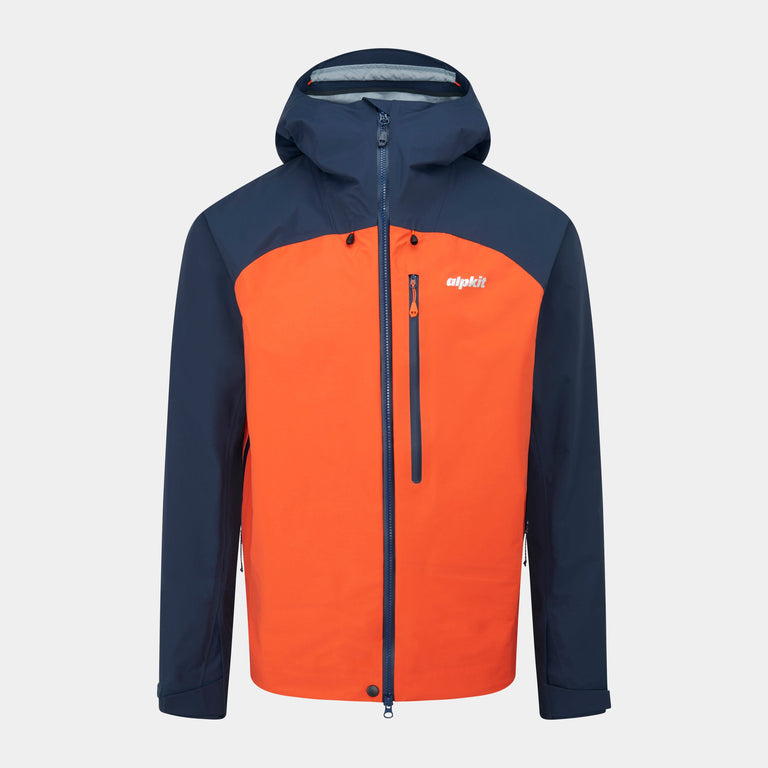
Waterproof mountaineering jacket for high altitudes and Scottish winters
£299.99
-
New
-
New
![Talini [Womens]](http://alpkit.com/cdn/shop/files/talini-1.jpg?v=1761823381&width=768)
![Filoment Vest [Mens]](http://alpkit.com/cdn/shop/files/mens-filoment-vest-2025-outerspace.jpg?v=1772627981&width=768)
![Filoment Vest [Mens]](http://alpkit.com/cdn/shop/files/filoment-vest-mens-2025-outerspace-1.jpg?v=1771953816&width=768)
![Filoment Vest [Womens]](http://alpkit.com/cdn/shop/files/womens-filoment-vest-2025-outerspace.jpg?v=1771952413&width=768)
![Filoment Vest [Womens]](http://alpkit.com/cdn/shop/files/AW25-Chamonix-JW-4299_1.jpg?v=1771952413&width=768)
-
New

![Filoment Hoody [Mens]](http://alpkit.com/cdn/shop/files/AW25-Chamonix-JW-5042_2.jpg?v=1764948177&width=768)
![Filoment Hoody [Womens]](http://alpkit.com/cdn/shop/files/womens-filoment-2024-celestial-COLOUR-CHANGE.jpg?v=1762183751&width=768)
![Filoment Hoody [Womens]](http://alpkit.com/cdn/shop/files/Camping-Arran-9548_1.jpg?v=1762190561&width=768)
Your next reads