

 Sonder Bikes


Whether you're fuel-and-go or a camp meal devotee, here are two bikepacking camp kitchen kitlists built around titanium cookware that earns every gram it costs you.
Ask two bikepackers about their camp kitchen and you'll get two very different answers. One will describe a titanium mug, a folding spork and a stove that runs off a lighter. The other will describe a proper burner, a decent-sized pan and the particular pleasure of cooking actual food after a big day on the bike.
Both are correct. Both require thought. What doesn't work is borrowing the wrong approach for your trip — going full gourmet on a fast three-day sprint and wondering why your frame bag weighs a tonne, or going minimal on a week-long tour and living off cold wraps because you didn't bring a stove.

This kitlist covers both setups in full: the fast and light camp kitchen built for riders who want to fuel up and keep moving, and the grand tour kitchen for riders who've earned a proper meal at the end of the day. Pick your approach, build your kit list, and pack accordingly.
If you're still figuring out how to distribute the weight across your bags, read our bikepacking packing guide first. For choosing your shelter and sleep system, see our guide to bikepacking tents.
In this guide
Fast and light camp kitchen
The fast and light approach to cooking is simple: minimise everything that doesn't directly contribute to calories consumed and miles ridden. One vessel, one heat source, one utensil. The goal is to boil water, eat, pack up and sleep — ideally in under 30 minutes.

This doesn't mean suffering. Done well, a fast and light camp kitchen is satisfying precisely because of its discipline. You appreciate the simplicity when you're carrying it all day.
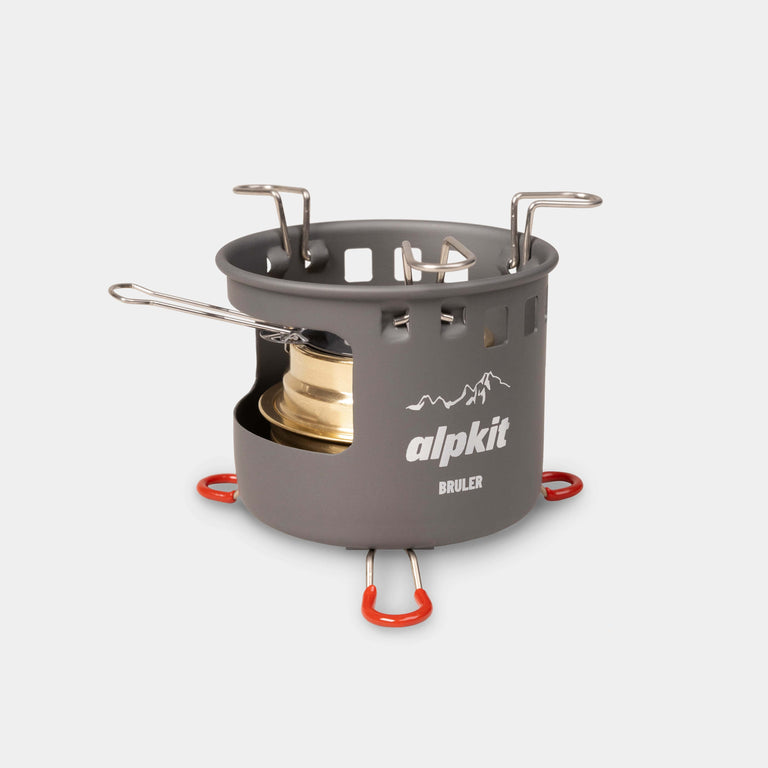
The stove: MyTiBurner titanium liquid camp stove
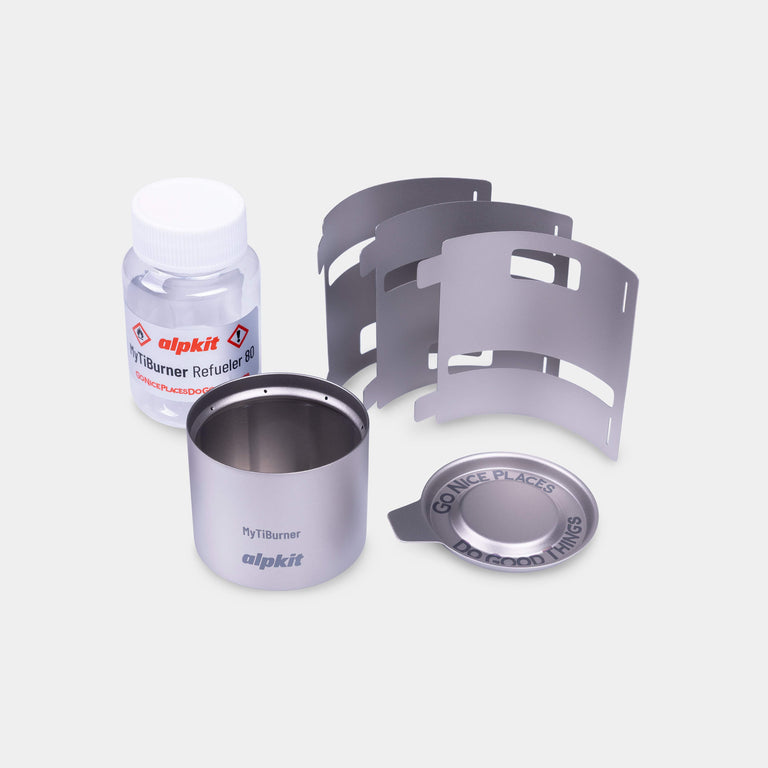
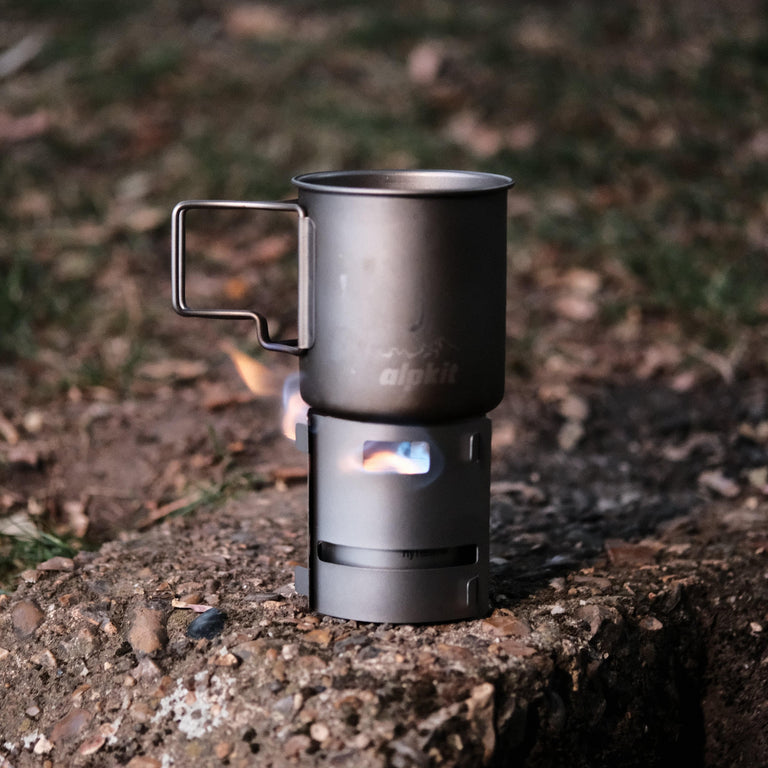
The MyTiBurner is our titanium alcohol stove — the kind of burner that fits in a shirt pocket and runs off denatured alcohol. It has no moving parts, nothing to break and nothing to malfunction in the field. You fill it, light it and it works.
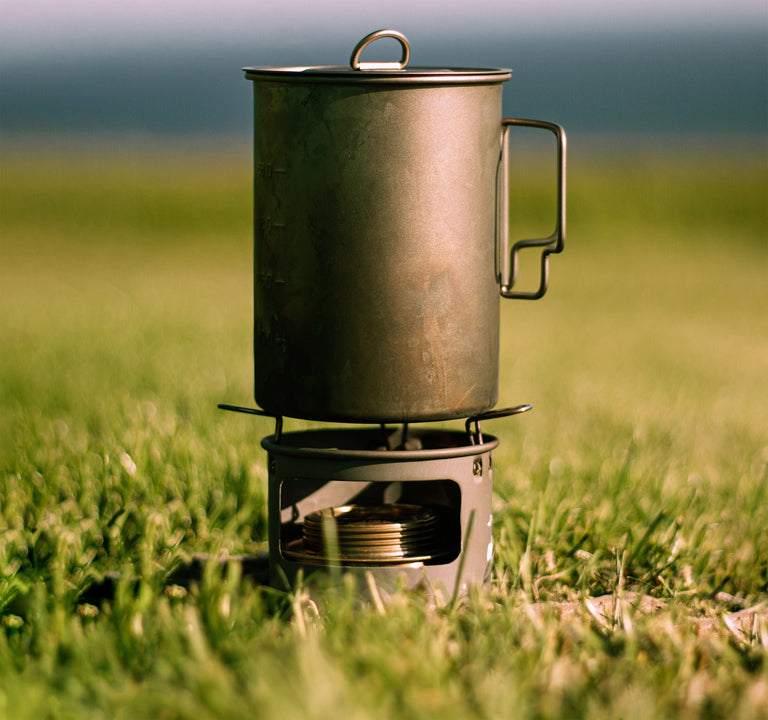
It pairs perfectly with a titanium mug for the most stripped-back fast-and-light camp kitchen: boil water for a dehydrated meal or a hot drink, eat, pack away, done. For rides where cooking is a function rather than a ritual, it's the stove that earns its gram count best.
The vessel: MytiMug 400 titanium cooking mug
The MytiMug 400 is a 400ml titanium mug designed to work directly over a flame. At under 60g it's one of the lightest cook vessels you can carry — light enough that it's a reasonable choice even on a gram-counting fast setup.
It's the right size for a hot drink, a dehydrated meal or a quick bowl of something warm. Not a feast, but enough to hit the calories and warm you from the inside before bed. Eat from it, drink from it, clean it in 20 seconds. That's the whole system.
The utensil: Snapwire foon folding titanium spork
The Snapwire is a folding titanium spork — half spoon, half fork, hinged in the middle. It folds flat and clips shut, so it fits in a jersey pocket or the top of any bag without rattling around or taking up meaningful space.
Titanium means it won't bend, won't corrode and won't pick up flavours. It handles everything from soup to pasta without complaint. At this end of the kit spectrum, the Snapwire is the obvious choice: it weighs almost nothing and does everything you need.
Your fast and light camp kitchen checklist
- MyTiBurner titanium alcohol stove
- Alcohol fuel (decanted into a lightweight bottle)
- MytiMug 400 titanium mug
- Snapwire folding spork
- Lightweight windshield (a folded square of foil does the job)
- Dehydrated or no-cook meals
- Tea bags, instant coffee or hot chocolate
Grand tour gourmet kitchen
The grand tour kitchen is built around a different principle: the camp meal is part of the experience. After 70 miles and a few thousand metres of climbing, cooking something real, something that takes more than three minutes is not inefficiency. It's the ritual that marks the end of the day and sets you up for the next one.

This setup is heavier. It takes longer to cook and longer to pack. On a multi-day tour where the riding is the journey rather than the race, it's worth every gram. If you need a reminder of what that looks like in practice, read Henry Morgan's account of bikepacking through Georgia — the kind of riding where a proper camp kitchen stops being an indulgence and starts being essential.
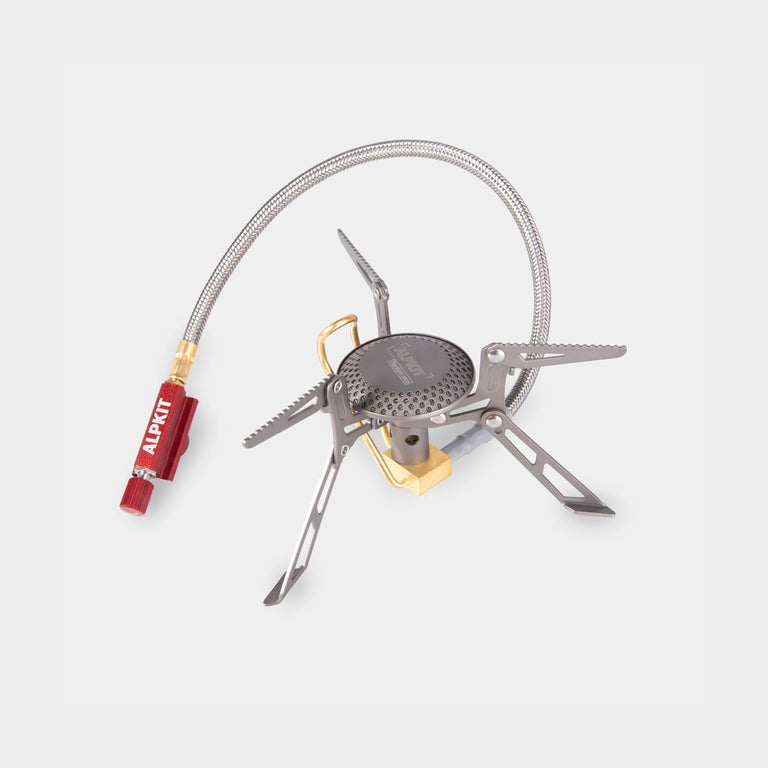
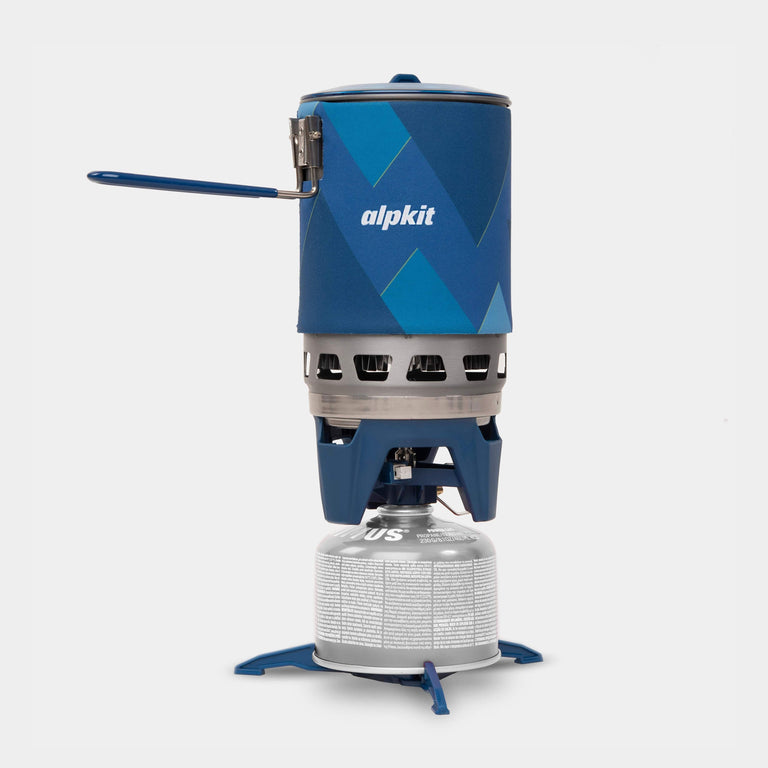
The stove: Brukit cooking stove
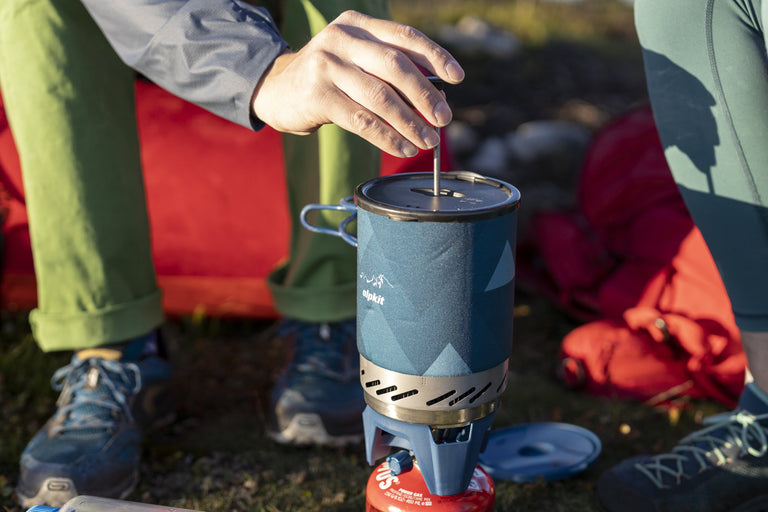
The Brukit is a canister stove that mates with a cooking pot to form a single integrated system. The heat exchanger on the base of the Brukit pot captures heat that would otherwise be lost, which means faster boiling times and more efficient fuel use. This is important when you're cooking proper food rather than just boiling water.
It runs on standard gas canisters, which are available across Europe and easy to source on longer tours. The simmer control lets you actually cook rather than just boil. Pasta, rice, fried eggs, a proper sauce: these are all in scope with the Brukit. It's heavier than the MyTiBurner but the cooking capability is incomparably better.
The pan: MytiPan 1200 recycled titanium cooking pan
The Mytipan 1200 is a 1,200ml recycled titanium cooking pan. It's our go-to for the grand tour setup because it gives you enough capacity to cook a proper meal for one, or a reasonable portion for two, without weighing you down with a full camping cookware set.
The recycled titanium construction keeps the weight low while giving you a pan that's durable enough to cook over a flame without hot spots or thin patches. It handles everything from boiling pasta to sautéing onions, and the lid doubles as a plate when you're eating directly from the pan.
The cutlery: TiMigos titanium cutlery set
When you're cooking a proper meal, a folding spork feels like the wrong tool. The TiMigos titanium cutlery set gives you a fork, knife and spoon as separate, full-sized pieces. They're titanium — light and tough — and they make eating a meal feel like eating a meal rather than scooping something out of a bag.
The grand tour approach is about the whole experience. Proper cutlery is a small part of that and worth the few grams it adds.
Your grand tour gourmet camp kitchen checklist
- Brukit integrated cooking stove and pot system
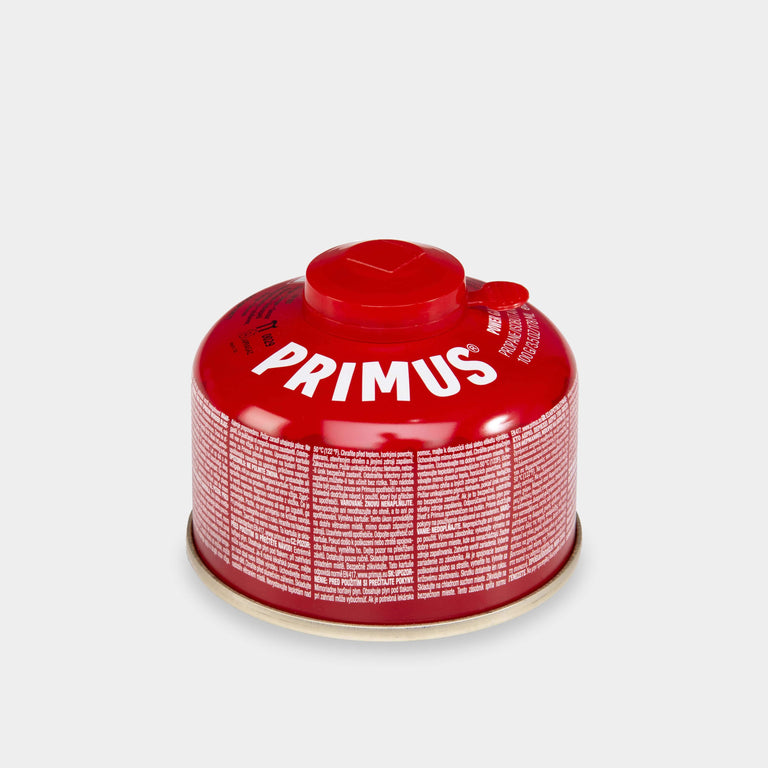
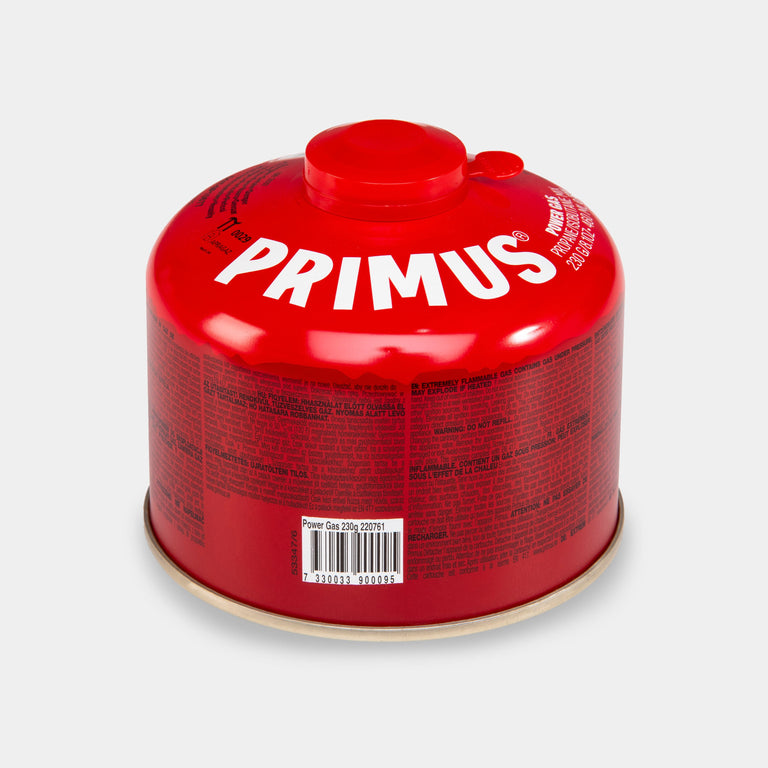
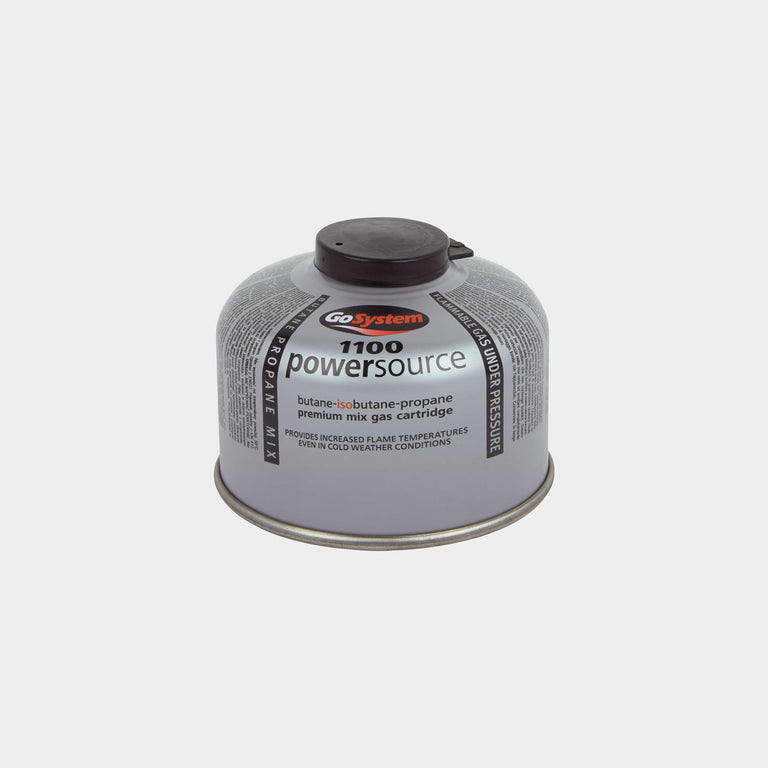
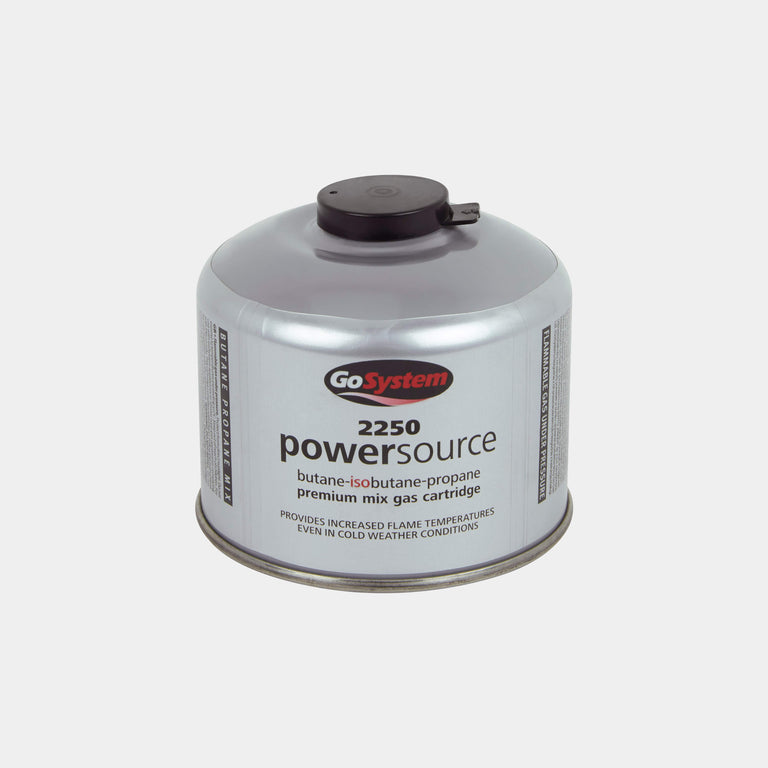
- Gas canister (100g for up to 3 days, 230g for longer)
- Mytipan 1200 recycled titanium cooking pan
- TiMigos titanium cutlery set
- A small sponge and biodegradable soap
- Ingredients: fresh or dried, your call

What both setups share
Two very different camp kitchens, but some principles hold across both.
Titanium over stainless steel. Both setups use titanium cookware. Titanium is lighter than steel, stronger than aluminium and won't corrode or absorb flavours. On a bike where every kilogram matters, that weight saving is straightforward to justify.
Pack the stove and fuel together. Whatever system you're using, keep your stove and its fuel in the same bag compartment. You'll find it faster and won't be unpacking half your frame bag looking for a lighter that's ended up in the saddle bag.
Know your fuel before you go. Alcohol for the MyTiBurner and gas canisters for the Brukit need to be sourced before or during your trip. In the UK this is easy. In remote areas, plan ahead. Nothing focuses the mind like a cold camp at the end of a long day with nothing to cook on.
Clean up properly. Leave no trace. Biodegradable soap, water away from water sources, and pack out everything you cook in, including empty canisters. The wild camps that are still available to us exist because bikepackers before us respected them.
Full checklists at a glance
Fast and light (< 300 g)
- MyTiBurner titanium alcohol stove
- Alcohol fuel
- MytiMug 400 titanium mug (cook vessel and drinking vessel)
- Snapwire folding titanium spork
- Foil windshield
- Dehydrated meals / no-cook food
Grand tour gourmet (> 500 g)
- Brukit integrated cooking stove
- Gas canister
- Mytipan 1200 recycled titanium cooking pan
- TiMigos titanium cutlery set
- Tifoon titanium spork with bottle opener
- Biodegradable soap and sponge
- Ingredients for real meals
Further reading
Camping Stoves
-
Sale
-
Sale

-
Sold Out
-
Sale

-
Sale
-
Sold Out
-
Sale
-
Sale
-
Sale
-
Sale
-
Sold Out