


 Sonder Bikes

How to layer liners, insulated and waterproof gloves, when a mitt is warmer, and which of our gloves suits walking, climbing, running and winter.
The best way to keep your hands warm outdoors is to layer your gloves, the same way you layer your clothes. A thin liner sits next to your skin, and a warmer or waterproof glove goes over the top when you need it. You take the outer off for fiddly jobs and your fingers stay covered.
The short answer for most UK walking: a liner or light everyday glove for most of the day, an insulated waterproof glove in your pack for wind, rain and stops, and a mitt if you feel the cold badly or go out in serious winter.
In this guide
- How a glove layering system works
- Warmth, dexterity and weather protection
- Gloves or mitts
- Waterproof gloves and keeping hands dry
- Choosing gloves for your activity
- Getting the fit right
- Our gloves and what each is for
How a glove layering system works
A glove layering system is two or three pairs that work together:
- A liner: thin and close fitting, for warmth on the move and for keeping your fingers covered when you take the outer off.
- An insulated or waterproof outer: sized to go over the liner, for wind, rain, snow and stops.
- A mitt, for the coldest days: over a liner, when warmth matters more than using your fingers.
Layering beats one thick pair because your hands don't need the same warmth all day. Climbing a hill, a liner is often plenty. At the top, in the wind, the outer goes on. And when you need to tie a lace, read a map or use your phone, you take the outer off without exposing bare skin. If one pair gets soaked, you still have a dry one.
Warmth, dexterity and weather protection
Every glove trades between three things: how warm it is, how well you can use your fingers in it, and how well it keeps out wind and water. More insulation and a waterproof insert make a glove warmer and drier, but thicker and less nimble. That's the reason for layering: no single pair is best at all three.
| Warmth | Dexterity | Wind and water | |
|---|---|---|---|
| Liner | Low | High | Low |
| Everyday glove | Medium | Good | Some wind resistance |
| Insulated waterproof glove | High | Lower | High |
| Mitt | Highest | Lowest | Depends on the mitt |
For winter gloves, insulation is often given in grams per square metre (gsm). Within the same insulation, a higher number is warmer: our gloves with PrimaLoft Gold run from 80gsm in the Frazil to 200gsm in the Shuga.
Gloves or mitts
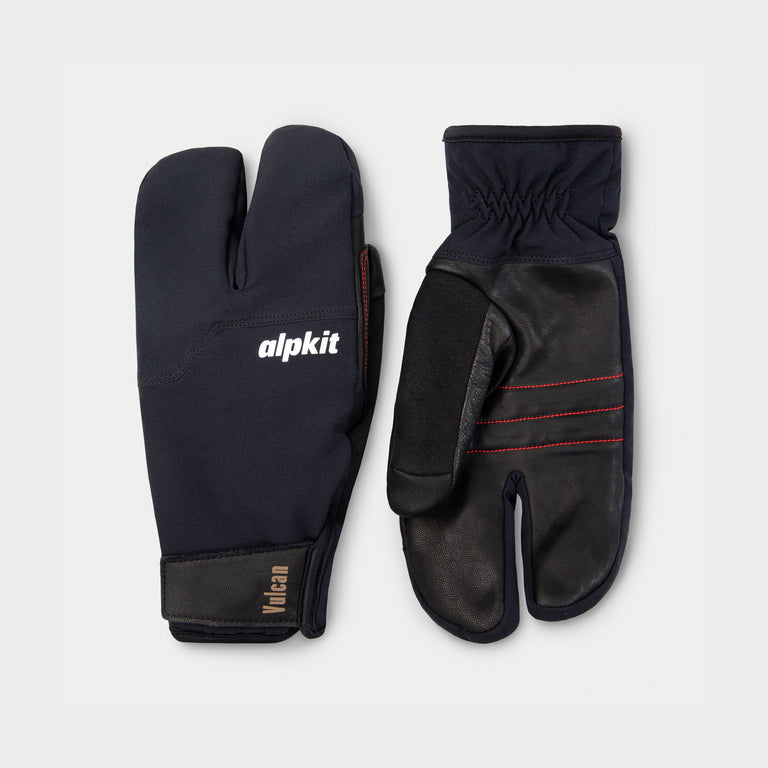
For the same insulation, mitts are warmer than gloves. Your fingers sit together and share their warmth, and there's less surface for heat to escape from. The cost is dexterity: you can hold a pole or an axe, but not do up a zip.
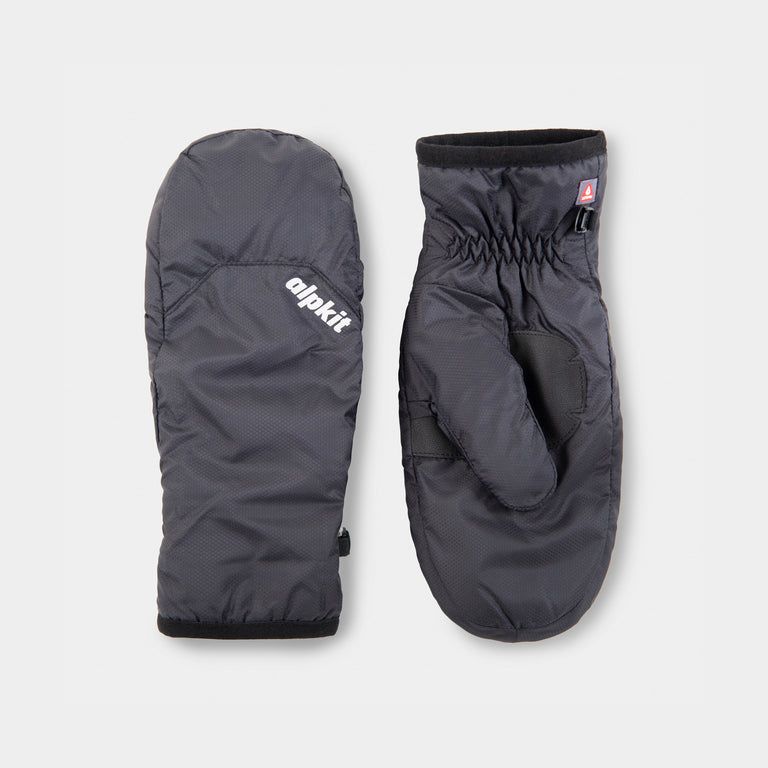
That makes mitts a good choice if your hands get cold easily, for long stops in winter, and for deep cold. Wear a liner underneath, so you can slip the mitt off for fiddly jobs. The Shiel Mitt packs small enough to carry as a just-in-case layer, and its thumb works on a touchscreen.
Waterproof gloves and keeping hands dry
Waterproof gloves have a membrane insert between the outer fabric and the lining, which keeps rain and snow out while letting some sweat vapour escape. Our Gabbro and Shuga use a PorelleDry insert.
Water still finds its way in through the cuff, and gloves get damp from sweat on the inside. Two things help. Gloves with a pile or brushed lining hold moisture away from your skin, so your hands stay warmer even if some snow gets in. And a spare dry pair in your pack makes a bigger difference on a wet day than any single glove.
Dry gloves away from direct heat. Radiators and stoves can stiffen leather palms and damage waterproof inserts.
Choosing gloves for your activity
Hillwalking in spring and autumn. An everyday glove like Aura, or Aura Grip if you use poles, with Mica for cold, dry days.
Winter walking and Scottish winter. Liners under an insulated waterproof glove such as Gabbro, with Shiel or a mitt as a spare. Take a second pair of outers on long days.
Climbing and scrambling. Dexterity comes first. Frazil for winter climbing, Haline for fast, light Alpine days, and liners for the walk in.
Skiing and the coldest days. Shuga, our warmest glove, with long cuffs to keep the snow out.
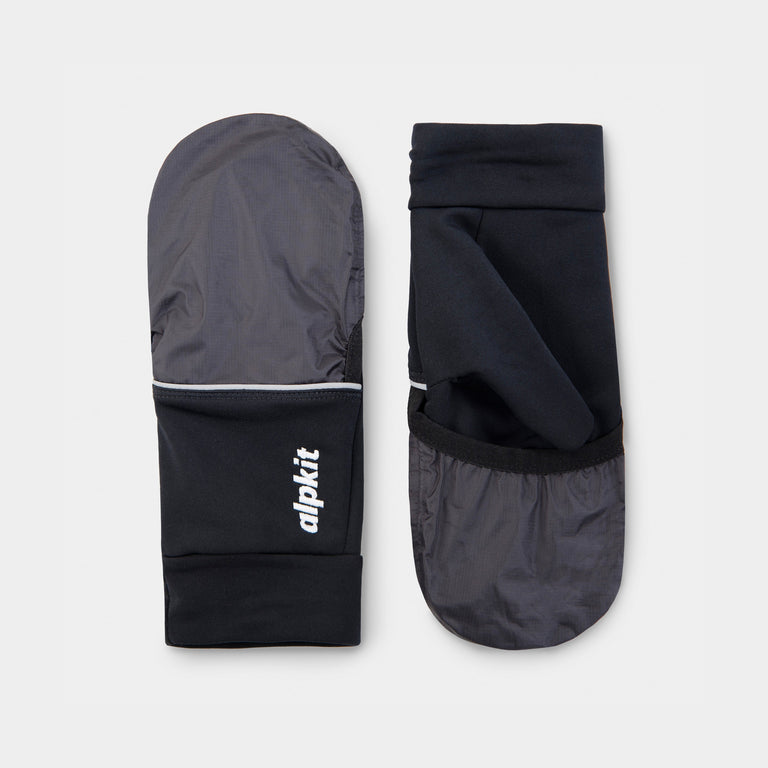
Running. A light, close-fitting glove that you can stuff in a pocket once you warm up, like the Specta Pullover with its fold-away windproof mitt.
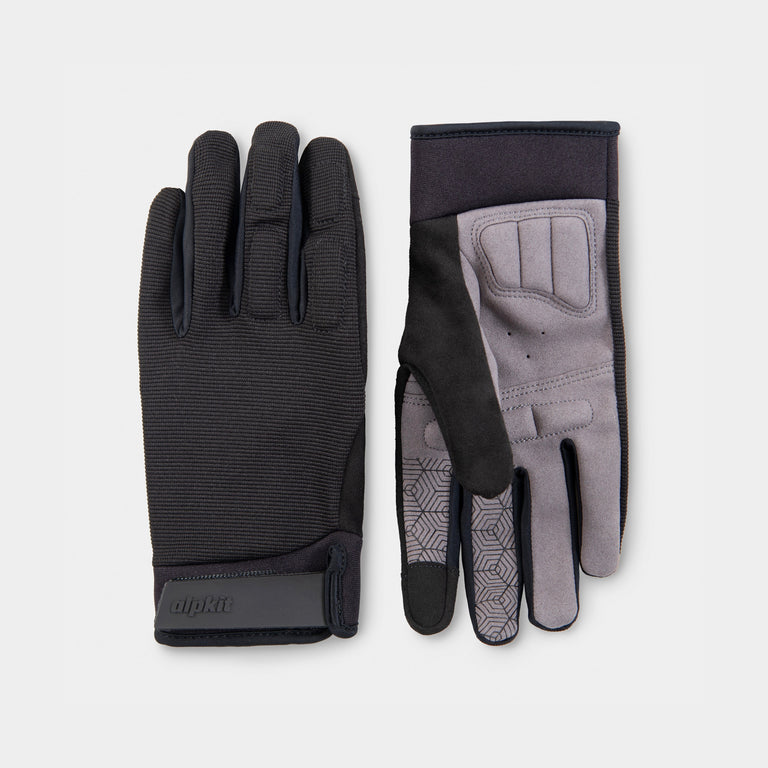
Cycling. Bike gloves need padded or grippy palms for the bars. See our glove buying guide for those.
Getting the fit right
A glove should be snug without squeezing. Your fingertips should reach the end without spare fabric beyond them, and you should be able to make a fist without the glove pulling across the back of your hand. Too tight cuts circulation and squashes the insulation; too loose and you lose grip and dexterity.
If you'll wear a liner underneath, try the outer on over it. Check you can still grip a trekking pole or an axe. And check the cuff works with your jacket: some sit under the sleeve, others are long gauntlets that go over it.
Our gloves and what each is for
Kepler Liner Glove: when you want a layer under everything. Corespun merino, slim enough to fit under bigger gloves and warm enough to wear on its own when it's mild. Kepler Liner Glove.
Aura: when you want one glove for most of the year. A close-fitting fleece glove that balances warmth and dexterity, so you can get into your pockets without taking it off. Aura, or Aura Grip with a silicone palm for poles and handlebars.
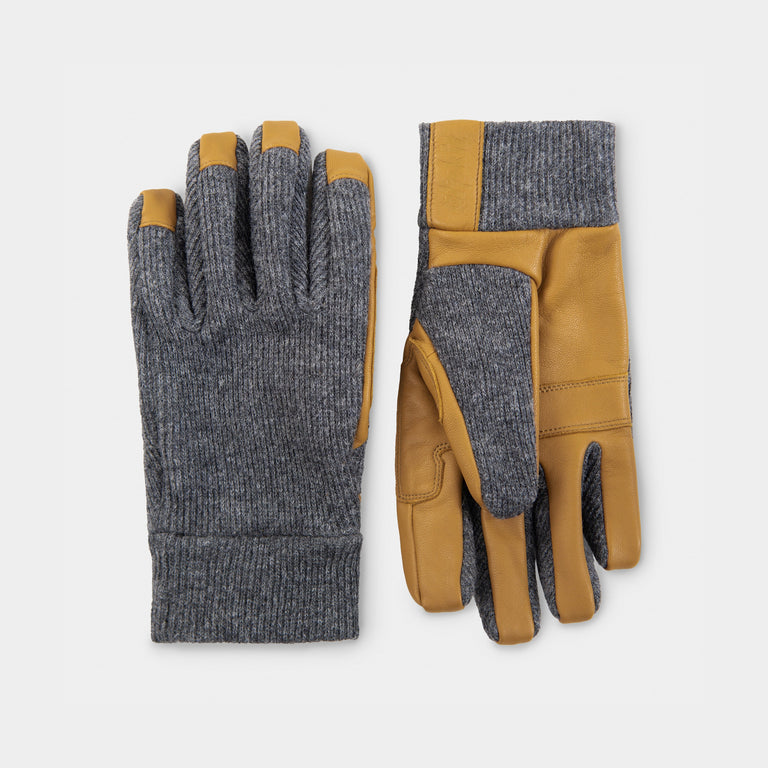
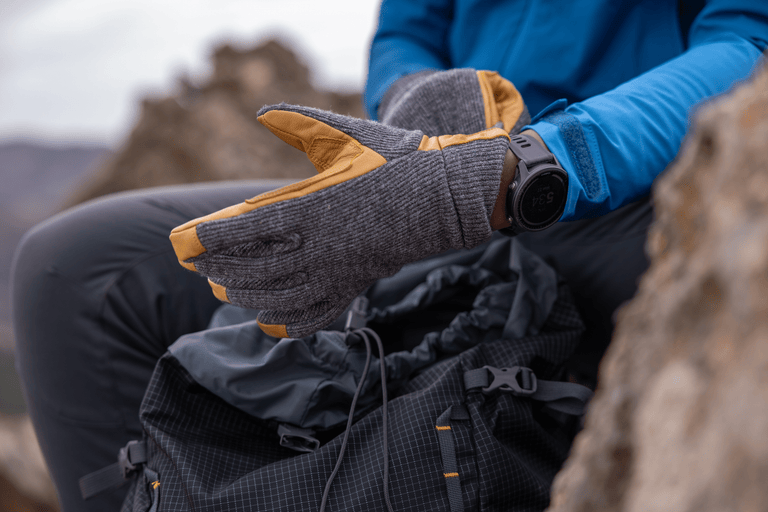
Mica: when it's cold and dry and you want natural fibres. A goatskin leather palm and a wool blend outer, with a thin wool terry lining. Breathable and hardwearing for walking and scrambling. Mica.
Shiel: when you want a warm spare that packs small. 100% recycled PrimaLoft Gold insulation with a PFAS-free water-repellent finish. Shiel Glove, also made as a mitt.
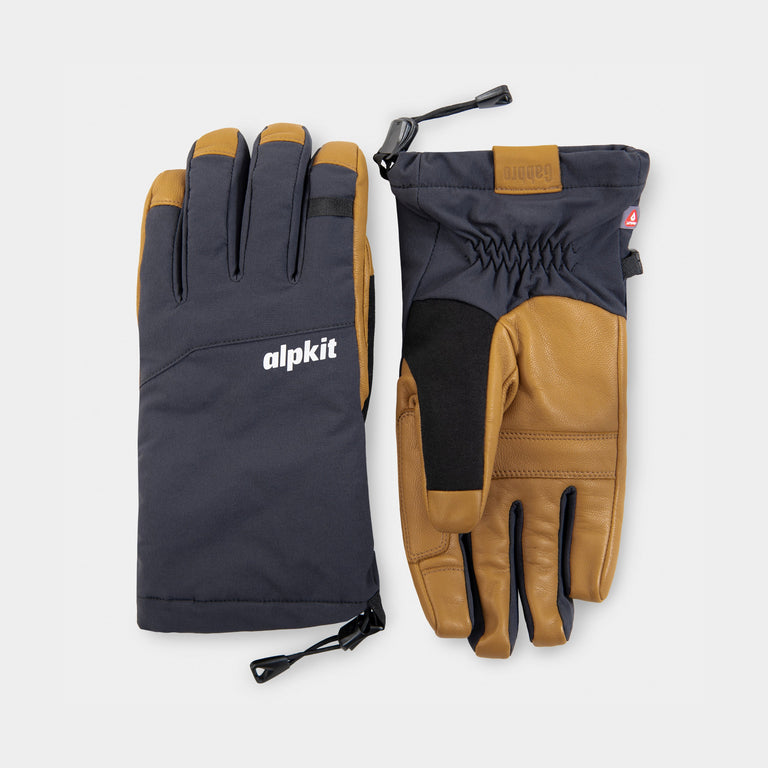
Gabbro: when winter gets serious. 100gsm PrimaLoft Gold, a pile lining and a PorelleDry waterproof insert, for winter walking, handling wet rope and easier winter climbing. Gabbro.
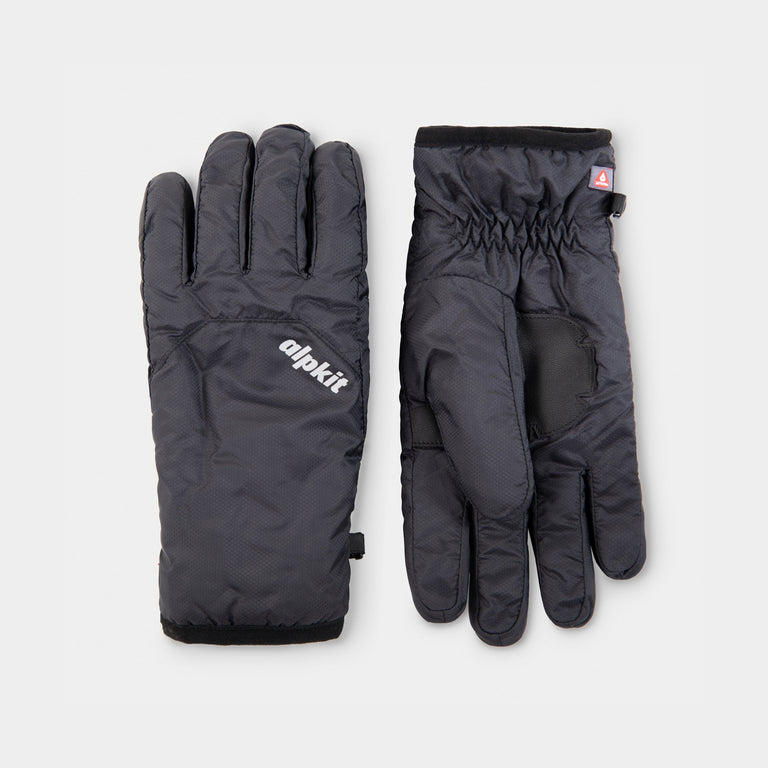
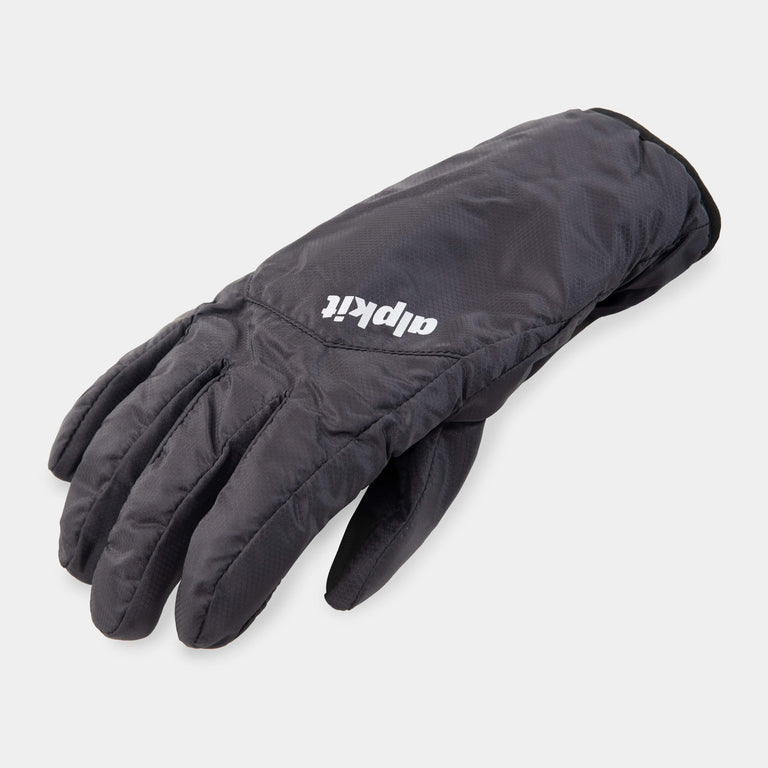
Shuga: when it's properly cold. Our warmest glove: 200gsm PrimaLoft Gold, a waterproof insert and long cuffs, for skiing and Scottish winter mountaineering. Shuga.
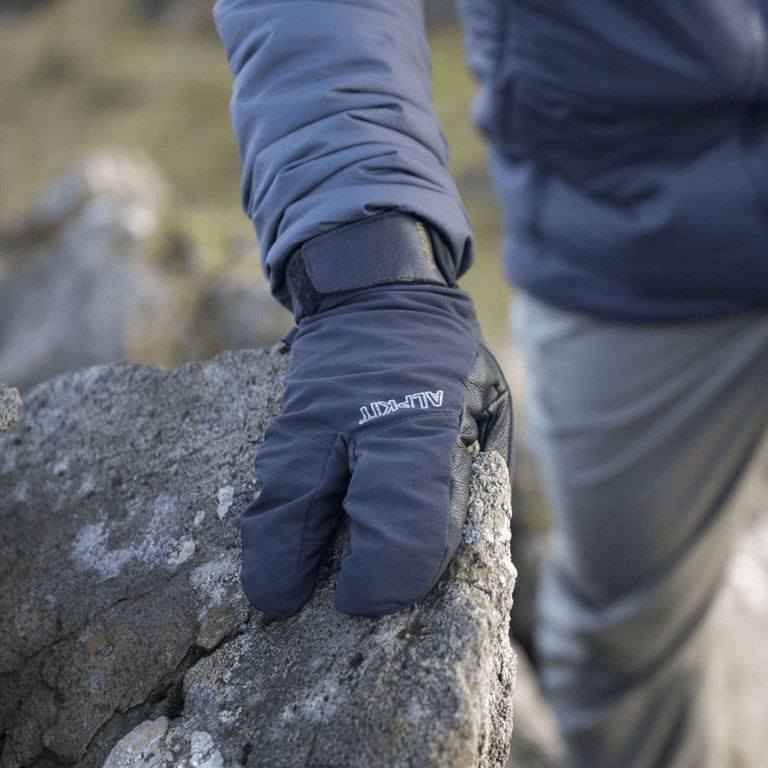
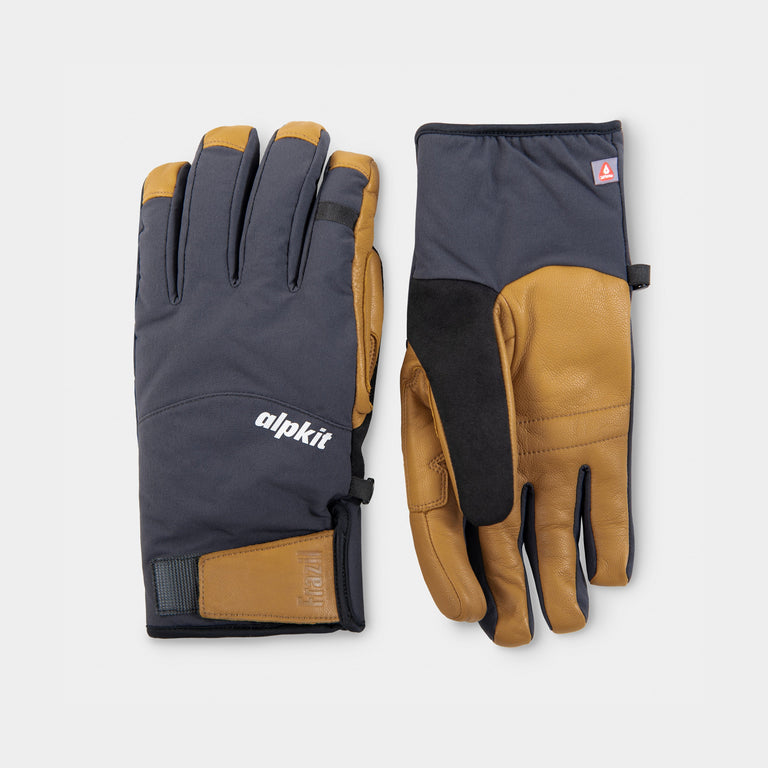
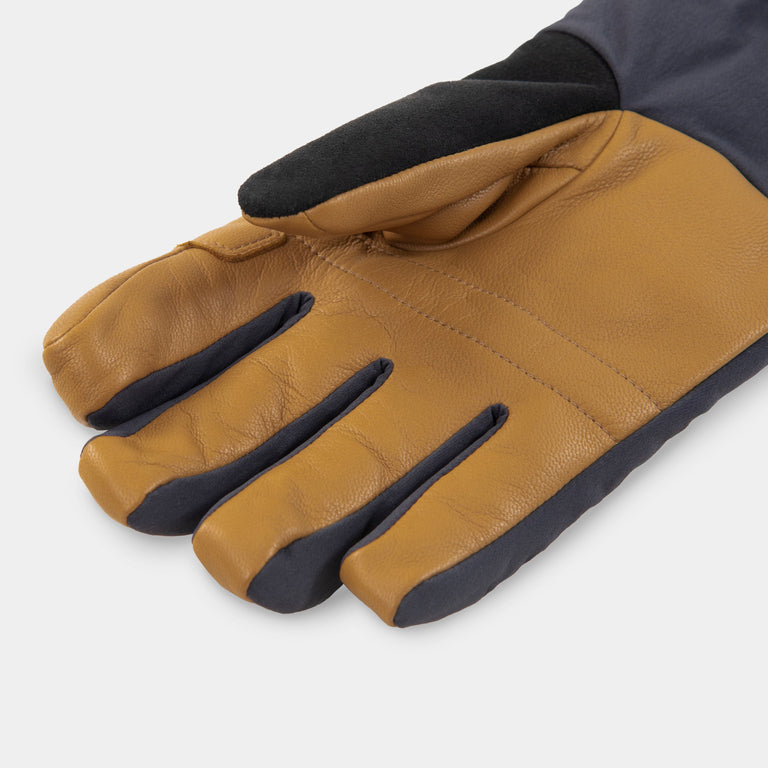
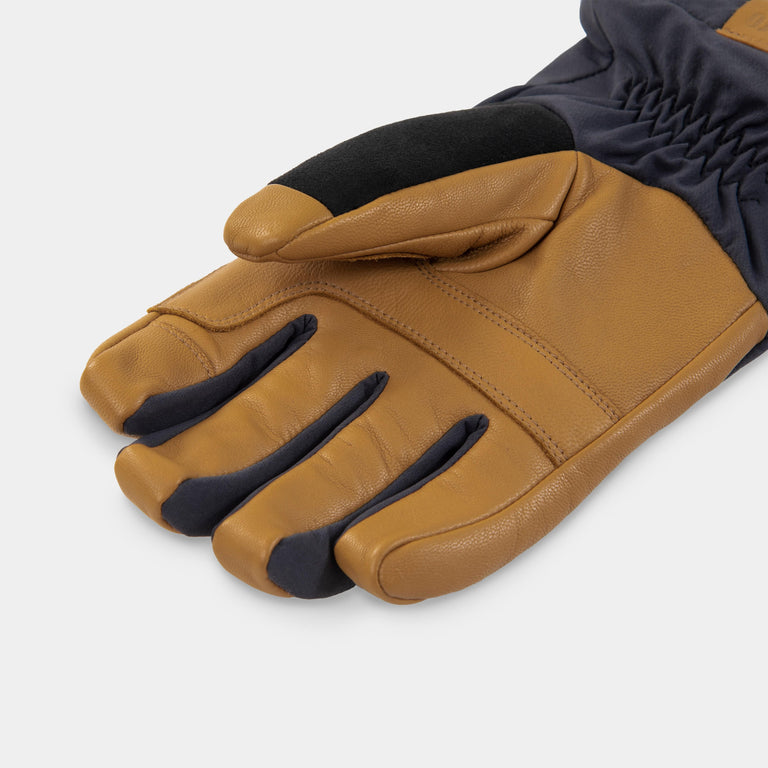
Frazil: when you need to feel what you're holding. A softshell glove with 80gsm PrimaLoft Gold on the back of the hand and a leather palm, for technical climbing, winter walking and ski touring. Frazil.
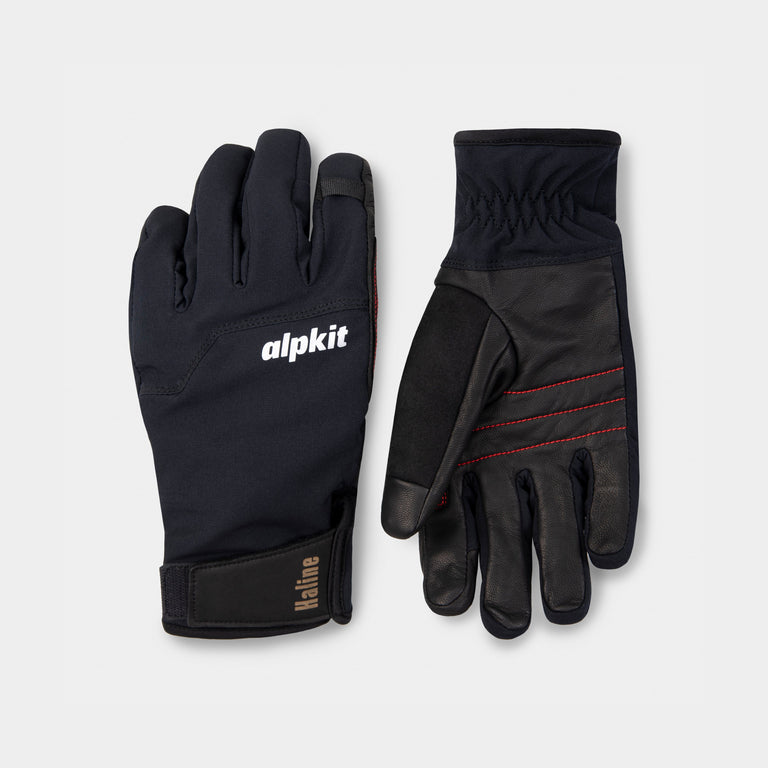
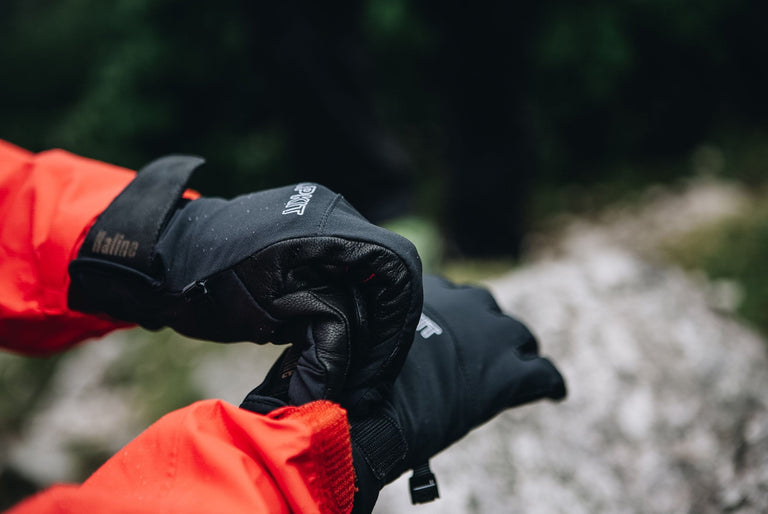
Haline: when you're moving fast in the Alps. A close-fitting waterproof glove with a goatskin palm, for chilly Alpine summer days and ski touring. Haline.
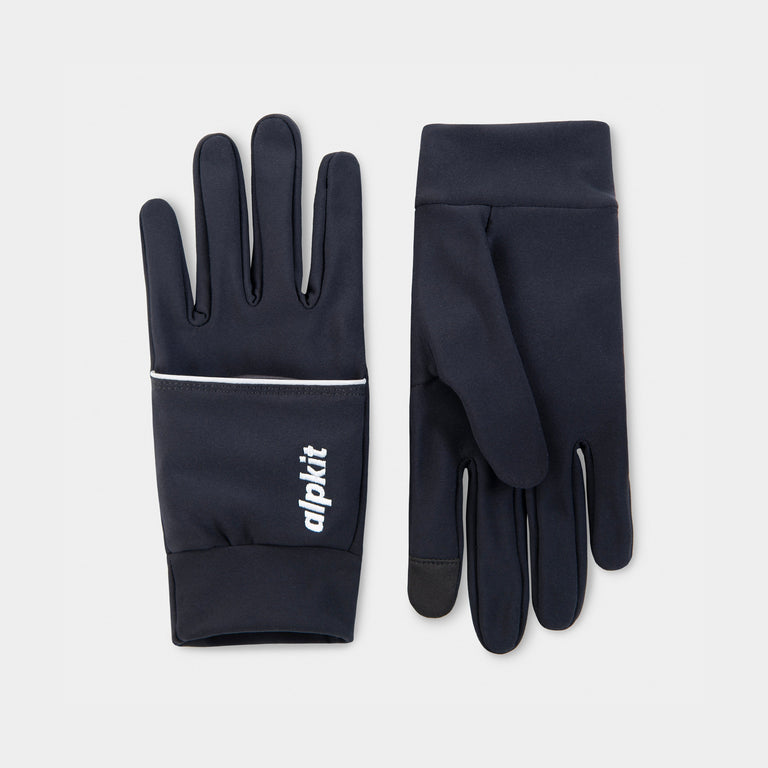
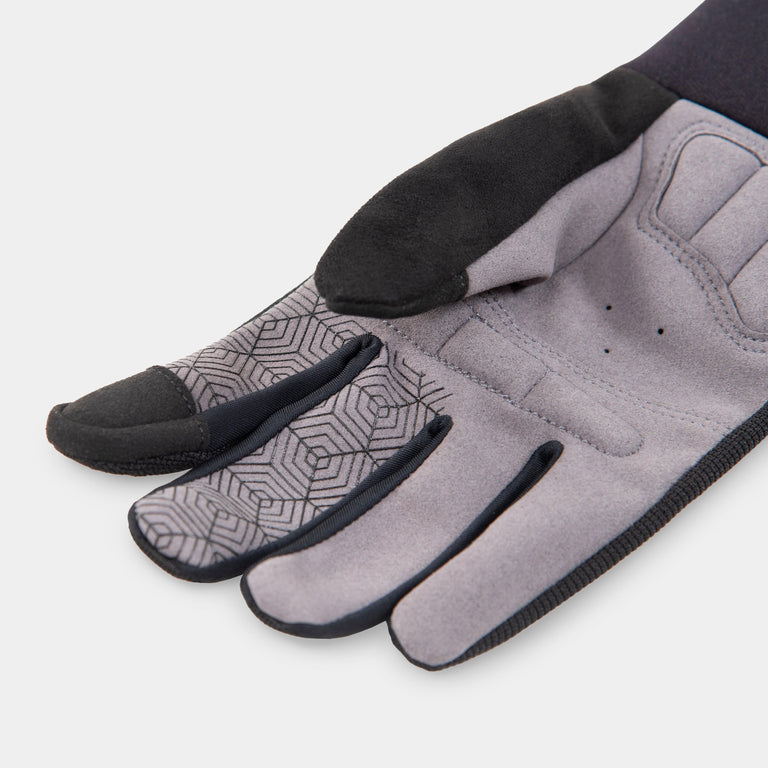
Specta Pullover: when you're running in the cold. A stretchy, close-fitting glove with a windproof mitt that folds away into the back, and touchscreen-compatible index finger and thumb. Specta Pullover Glove.
See all gloves.
Related glove guides
- Buying guide: outdoor gloves: our range, from liners to winter and cycling gloves
- The technology inside gloves: fleece, grip pads and softshell explained
- Protecting extremities in winter: keeping hands, feet and head warm
Complete your outdoor protection system:
- The Complete Guide to Outdoor Clothing: Layering Systems That Work
- Base Layer Guide: Merino Wool vs Synthetic Materials
- Mid Layers Guide: Fleece and Natural Fibres
- Insulated Jackets: Down vs Synthetic Complete Guide
- Waterproof Jackets: Your Complete Guide to Staying Dry
- Outdoor Trousers, Shorts and Leggings: Your Complete Guide
- Hiking Socks Guide: Materials, Cushioning, and Fit
- Keeping Your Hands Warm: The Complete Guide to Outdoor Gloves
Gloves
-
Black Friday

-
Black Friday


Shuga Glove
Midweight waterproof insulated winter glove for winter mountaineering and alpinism
£71.99
£79.99
-
Black Friday

-
Black Friday

-
Black Friday
-
Black Friday
-
Black Friday
Frazil Glove
With zoned insulation so you can maintain dexterity whilst technical climbing
£38.99
£55.99
-
Black Friday
-
Black Friday


-
Black Friday


-
Black Friday
Specta Pullover Glove
Running gloves with stowable windproof pullover mitt and touchscreen fingertips
£19.99
£23.99
-
Black Friday

Your next reads