





 Sonder Bikes


The Canary Islands. A popular winter sunshine escape for those of us in Europe, but it’s often overlooked as an excellent hiking and cycling destination.
The Gran Guanche rail is a 500 mile bikepacking route from Lanzarote’s North East corner over to La Palma, the jewel of the Canary Islands, via the islands of Fuerteventura, GranCanaria and Tenerife. Riders navigate the islands by ferry, which are very accommodating of bikes and fairly frequent.
The beauty of this adventure is in the diversity of landscapes. Lanzarote and Fuerteventura are hot dry desert islands, with very little fresh water, and they give way to lush mountains and forests on GranCanaria, Tenerife and La Palma.
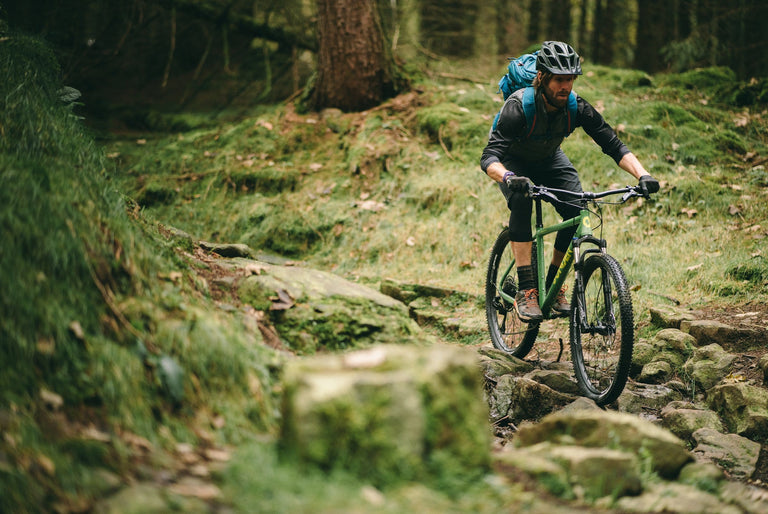
I’d been bikepacking in Tenerife a number of times in January and February, to escape the cold winters of Northern England, but I felt like I wanted to challenge myself to a longer, more arduous adventure. I flew to Arrecife from Manchester UK, with my trusty Sonder Frontier hardtail, where I’d planned to follow the Trail version of this route. There are a number of different route variations, but I’d be inclined to say the trail version is the toughest: massive elevation gain and a fair bit of hike-a-bike thrown in for good measure, as well as some very remote sections of the islands with no phone signal or access to fresh water supplies.
Lanzarote was a desert island, with minimal elevation gain compared to the following 4 islands. It’s a nice way of easing into the route, which I found got progressively harder on each island, that may have been fatigue, but probably more to do with the toughness of the terrain.
I spent two days here, riding a mix of smooth roads and compact gravel with a small amount of hike-a-bike that followed a rocky footpath, but otherwise, the weather was great and the riding was superb.

I wild camped on the Northern shore of the Island next to the turbulent waters of the Atlantic Ocean, after restocking in Caleta de Caballo, a cool surfing town, where the beach was blowing onto the road.
Day two saw me riding back down, on a pleasing mix of roads and gravel tracks again, to Playa Blanca on the southern tip of the island. This is where I planned to catch a ferry across to Fuerteventura. I made a slight error here, cutting out a bit of the route to try and save time and ensure I made my ferry that evening, but the road I chose to join was guarded by policemen waving cyclists down and telling them to go back down the hill and use a different road. Apparently bikes weren’t allowed… Probably would have made sense to mention this at the bottom of the hill at the start oft he road, rather than at the top…
Thankfully, I made the ferry just in time and stayed in a hostel in Corralejo: the northern port of Fuerteventura.
I had been nervous about Fuerteventura. When I’d done my planning and preparation for this trip, I’d seen some really tough elevation gains across the barrancos (ravines) on the West coast, but the thing worrying me the most, was the lack of water restocking options. There were stretches of 25-30 miles of really tough riding where there wasn’t going to be anywhere to refill my bottles, and in the scorching heat, this left me slightly worried in case something were to go wrong.
I was right to be worried, the first day got progressively harder and, as expected, the barrancos really wore me down. There wasn’t any phone signal at all, which added to my concerns, but after what felt like a long 50 mile day, I eventually found a sandy, hidden section near Barranco de Janey away from the fierce winds to set up my tent for the night.
Just like Lanzarote, I was only spending two days on Fuerteventura. So I got up early the following morning, to get a head start on the baking temperatures I’d had the day prior, and ensure that I made good progress to the port of Morro Jable on the south of the island. I wasn’t as pressed for time as before, as the ferry wasn’t until the wee hours of the next day, but I still didn’t want to push it too hard, with all the days of riding I had left.

This section out of the barrancos I’d been camping in, was very challenging. Many sections were unrideable because of the gradient, exceeding 35% or more at times on a loose mix of sand and rock, so it took me a couple of hours to cover the handful of miles back to civilisation.
Once back on some easier roads and gravel tracks, made the decision near Costa Calma to see if I could catch a bus, the final 15 miles to Morro Jable, my finishing point. The winds were very strong, and I was battling a block headwind with no buildings or plants to shelter me, making it very challenging. Thankfully, the bus let me on and kindly stored my bike underneath the bus in a luggage compartment at no charge.
Ridiculously early the following morning, I caught a 3 hour ferry over to Gran Canaria, the middle island on this adventure. It’s here where the landscape starts to change. The mountains and the extra distance away from the Sahara, naturally means there’s moisture and running water here, making it a very lush place the higher up you ride.
The route starts in Las Palmas, the capital of Gran Canara, and follows some historic barrancos and river beds up towards the highest point on the island, Pico De Las Nieves. I rode past some historic aqueducts from the time the Spanish invaded these islands, as well as many other cool things commemorated with plaques.
As I made my way up to Pico de las Nieve, where I’d planned to stay in a refugio, a storm came in, as if from nowhere. A stark contrast to the dry windy days I’d had prior. The temperatures plummeted and I soon found myself getting cold. The winds had picked up alarmingly, and after passing a couple of miserable looking hikers, who told me that the ridge where I was going was even more ferocious than where we were currently, I cut my day short, set up my tent in the most sheltered place I could find, and battened down the hatches for the night.
Morning came. The winds remained. I’d had one of the worst nights camping in a while. My kit had been soaked and water had seeped into my off-the bike clothes bag. I had never really got myself warm enough to sleep. I was also conscious I had pitched my tent in someone’s farmland, not far from the road, and not very well hidden - so that kept me up at night a bit as well!

I packed up, and set off for the remaining 6-7 miles up the mountain to the road. Despite riding up steep tracks and hike-a-bike at times, I simply couldn’t get warm. I made the emotional decision to ride back down to sea level instead of ploughing on. I knew the temperature would be more favourable down there, and the chimp in my head convinced me it was the right thing to do.
In reality, it wasn’t a big deal, I was heading down to the coast that day anyway, I’d just missed a bit of the climb up to the peak, and it was so foggy up there, I wouldn’t have exactly enjoyed the views.
I whizzed down the mountain on the road, and soon found myself warming up as I got closer to the towns and out of the clouds.
I’d managed to book myself on a ferry from Las Palmas to Santa Cruz de Tenerife, the penultimate island on this voyage. Little did I know, the storms were about to get worse.
As the ferry came into the port at Tenerife, I felt like I was visiting an old friend. I’d ridden here so many times that I was looking forward to some familiar roads and places. I thought it would break up the challenging route and recharge my batteries for the final island of La Palma.
The basic premise of the route here is from Santa Cruz de Tenerife, the capital city, across the spine of the island up to near Mount Teide, one of the highest volcanoes in Europe, and then down the other side to the south of the Island at Los Christianos.
The ride up from Santa Cruz was easy enough, a long windy road up to Anaga forest, from there, I would join the dirt roads and gravel tracks on the long ascent up to Teide. After only a couple of hours of relative peace, the heavens opened and the storm reared its ugly head again. The rain this time was biblical, drenching me completely within about two minutes. My plan was to wild camp in the Anaga forest and work my way up to Teide the following day.
With the painful memory of my freezing camp near Pico De Las Nieves still very much in my recent memory, I talked myself out of the wild camp and found myself a cheap hostel in San Cristobal de la Laguna, about 10 miles short of where I had intended to ride. I was very glad of the chance to dry out my clothes and get warm that night, and knew I could easily make up 10 miles the following day and be right on schedule again. But Tenerife had other ideas!
Eager to make good time, I left the hostel early the next day and rode up to the dirt roads leading me to the volcanic areas above the clouds, and despite some fallen trees slowing me down, I was confident I could regain my progress that I’d lost. Hours went by as I climbed higher and higher, the rain was light but nothing compared to the day before, so I was feeling positive. I really wanted to get above the cloud line and see the sun again!

Nearing the top of the route, I came across the inevitable. The straw that broke the camel’s back. A large fence stood before me and had been erected with a very obvious warning sign, saying that the route was closed from this point. I contemplated ignoring it and continuing, but given I’d had run ins with the Spanish police already, I didn’t want to get in trouble.
The only issue now, was that the only off-road passage I was aware of up to the volcano was this one. The alternative, would be to ride all the way back down to where I’d started that day, and join the main roads up. When I’d done the calculation, the mileage was simply not going to be achievable. Not only that, it had a knock on effect for the rest of the trip. If I were to set up camp earlier than I’d planned, I’d then have a monster of a day thereafter, making it likely I would miss the ferry across to La Palma. Yet again, I had to change plans.
I joined one of the dirt tracks that head down the northern side of the mountains to get to Puerto de la Cruz, an area I knew well, and I knew would have decent transport links to the south. I found another cheap hostel outside of town, and begrudgingly dismounted the bike, knowing full well I’d now not be able to ride to the south in time for the ferry.

Determined to complete the journey after several consecutive setbacks, I thankfully made the first bus the next morning over to Los Christianos and caught the ferry over to the final island of La Palma.
La Palma is known as the jewel of the Canary Islands, which is a very fitting name for such a beautiful place. I had planned to complete the route in four days, giving me a bit more room for error in case things were to go wrong again.
The route here was incredibly tough going, but entirely rideable. I rode from Santa Cruz de la Palma up a long fire road-like track, constantly climbing through ever changing landscapes, from sunny mountain sides, to higher altitude pine forests. I didn’t see a single person on any of the tracks on La Palma, which made it incredibly peaceful. I was going to Join LP-4, a main road at the top of the track, and wild camp a bit further down the next track, but I decided to set up camp before the road instead. Only about 6 miles short of where I’d planned. The main reason for this was the climbing. I’d done nearly 7000ft in just 20 miles, heavily loaded and stopping regularly for filming, I was knackered.
There’s something special about pine forests at altitude. The dry ground and quiet surroundings makes it easy to have a restful sleep, but the real icing on the cake is the cloud inversion that normally greets you at sunrise: and here was no exception. Absolutely stunning!
Thankful I didn’t have any major setbacks, I packed up the tent, and joined the road up to the highest point of the route, on the edge of the Caldera de Taburiente National Park. Views here were just something else. I spent a few minutes admiring the views, before riding down a very steep descent North to Roque del Faro. I was running very low on food and water, as I’d used more than anticipated the day before. I’d planned to stock up in Roque del Faro, but seemingly every cafe or restaurant was closed. Again at the next village. And at the next…
Finally, I found a petrol station that was open and immediately went into bonk reduction mode. I bought several litres of water and coke, chocolates, breads and meats and cheeses, buying far too much more than I could actually eat. After half an hour of stuffing my face and rehydrating. I felt like a new man.
The finishing point of the day was at El Pinar, at a stargazing campsite, that offered tours to quiet parts of the island above the clouds that were ideal for cut activities. I opted not to go do this, but it’s pretty cool nonetheless. It was also a very cool campsite, with composting toilets and geothermally heated showers.
The weather was perfect. I’d pitched my tent on a raised section of the site, and it was very quiet, overlooking the sea in the distance, the breeze was behind me so I could stay looking out with the tent door open, enjoying the setting sun.
With just two days left to ride, I felt a second wind of energy, and for the first time, I could focus on completing this epic challenge. I’d booked to stay in a town called El Paso at a cheap hostel. From there it was simply a case of looping back down to Santa Cruz to catch the ferry back again.
I packed up my gear and joined the road out of the town of Puntagorda down to LP-111, a long, windy, quiet B-road that was virtually traffic free. I rode here until I rejoined the gravel routes I was on the day before. As before, I didn’t see a single person up here. The quiet dirt roads and gravel tracks weaved in and out of more pine forests and steep barranco river beds, something I’d become accustomed to.
The tracks led me down to Tazacorte, a reasonably large fishing town and banana plantation where I restocked on food and water before tackling the long climb away from the coast up to El Paso.

El Paso was a lovely little town. It looked like a traditional Catholic Spanish town, with churches and statues to the Virgin Mary seemingly on every corner. The hostel was superb. I’d paid a bit extra to get my own room, and enjoyed its roof terrace overlooking the old town.
The final day of this incredible route was not going to be easy. Despite it being fairly short at around 30 miles, the first half was entirely uphill. I rode out of El Paso to the familiar dirt roads I’d enjoyed the day before, but after a mile or two of riding, the surface changed. The dirt tracks gave way to deep black, volcanic sand, which was completely impossible to ride on. That coupled with a surprising number of gates to throw my bike over, meant progress was very slow. Hours went by until I finally reached the LP-301 main road across the centre of the island. Just as I did, the Canary Islands had one final bit of bad weather for me. The storm I’d escaped on Tenerife, seemed to have risen from the ashes, albeit weaker than before, but the clouds drew in and the winds strengthened significantly. Enough to make steering a challenge. Normally, the route would continue south here over more dirt tracks around the southern tip of the island near to Los Canarios. I made the decision to cut 10 miles off the route and ride down the road and get out of the storm - scarred by the atrocious weather on the previous two islands.
Thankfully, the weather eased as I shot down the mountain to the capital city. As I was riding down into the ever-warming temperatures, I started to feel proud of my accomplishment.
Things hadn’t gone to plan. I hadn’t stuck to the route entirely, and I even had to use a bus on more than one occasion. For some purists, that may not have felt like an achievement. However, I knew the riding I had done, had been some of the toughest consecutive days of riding I’d ever done, in a myriad of conditions, all by myself and I’d got a great story on camera to tell.
Sonder Frontier
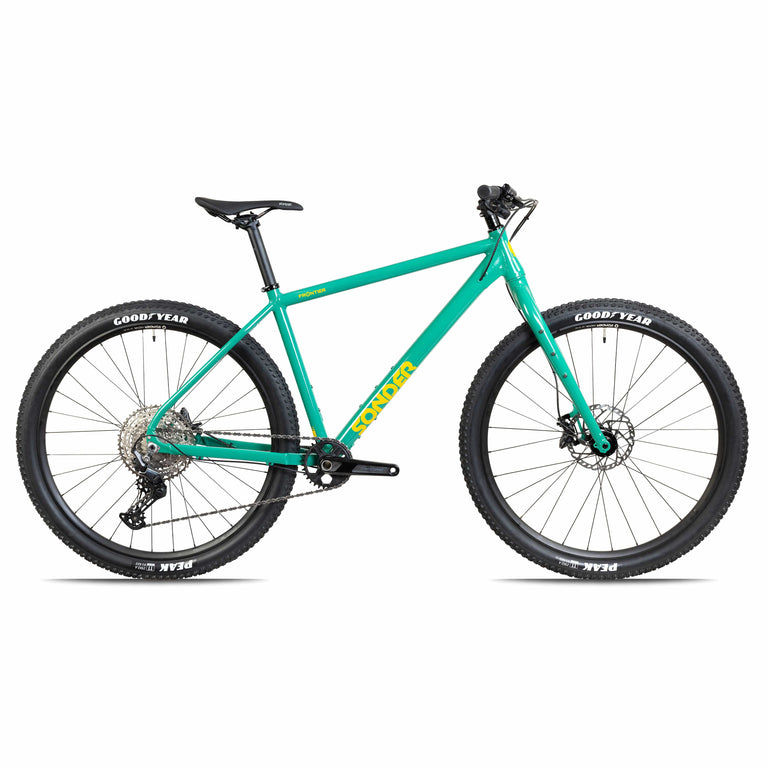
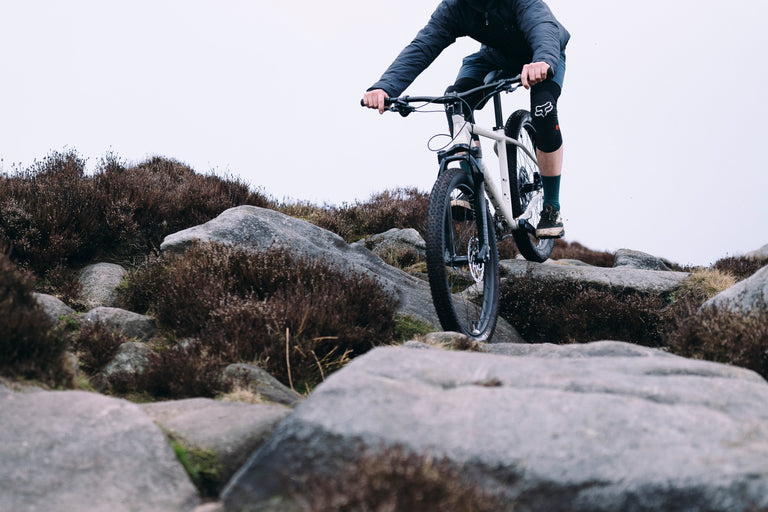


Frontier Deore Rigid
- Shimano Deore M6100 12-speed groupset
- Frontier Rigid fork
- Sonder Nova 29 XC wheelset
£1,099.00
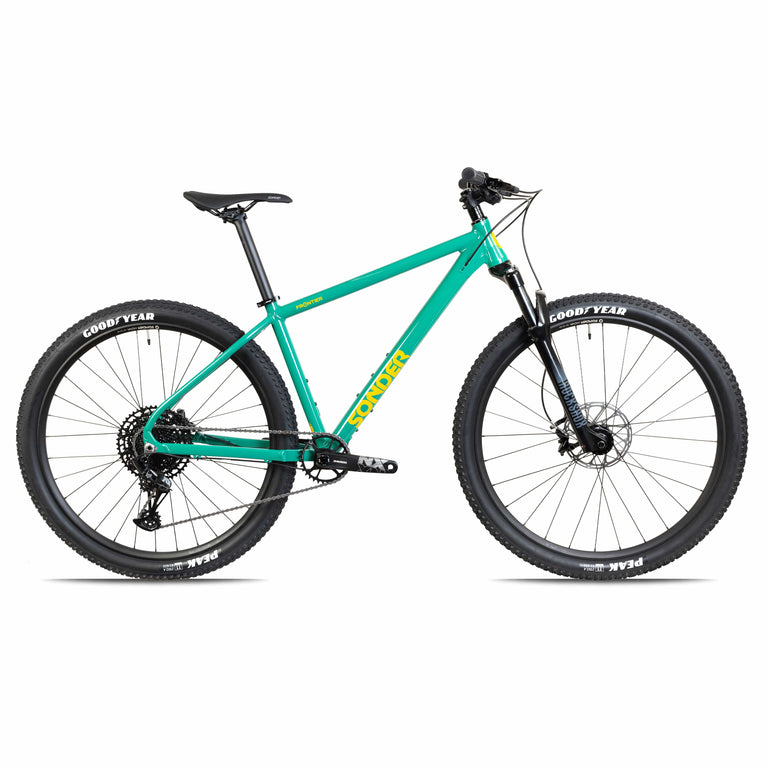
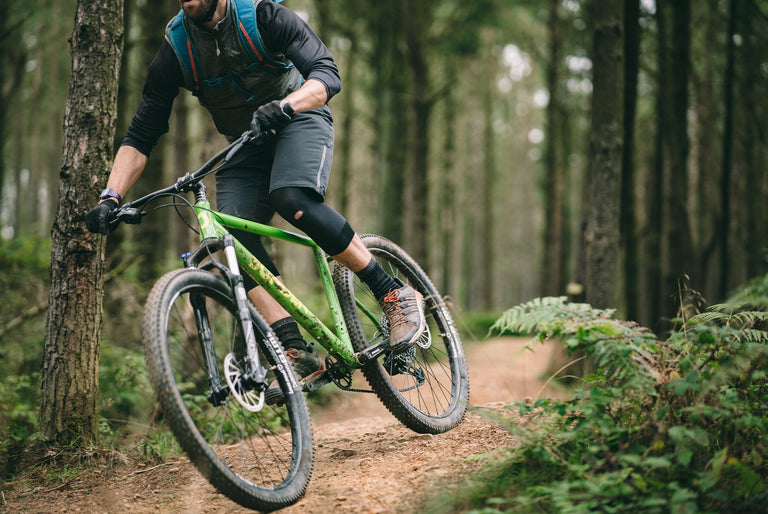
Frontier NX Eagle
- SRAM NX Eagle 12-speed groupset
- RockShox Recon Silver RL fork
- Sonder Nova 29 XC wheelset
£1,349.00

Frontier Deore
- Shimano Deore M6100 12-speed groupset
- RockShox Recon Silver RL fork
- Sonder Nova 29 XC wheelset
£1,299.00


Frontier Frame And Fork
Alloy frame and fork to build up your own 29er mountain biking, trail munching dream machine.
£449.00