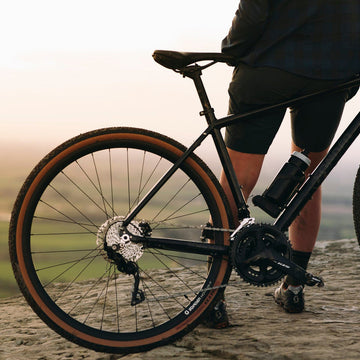


 Sonder Bikes

Gravel bikes are made for long days on mixed terrain: road, bridleways, tracks and trails. We cover geometry, tyres, what to carry for bikepacking, and how to choose between race and adventure models.
Gravel bikes seem to be all the rage right now. Maybe because they are. They’re the road bike’s fun younger sibling. They take you away from the traffic and barreling towards adventure. But what does gravel even mean? What are gravel bikes for? And do you really have to wear an unbuttoned checked shirt and SPD sandals to ride one?
Gravel bikes: built to go where road bikes can't
- Gravel bikes, defined
- Key factors when choosing a gravel bike
- Are gravel bikes good for long distances?
- Gravel bike vs touring bike vs trekking bike
- The Sonder gravel range
- E-gravel bikes, defined
- Gravel bikes for touring and bikepacking
- Mountain bike, cyclocross or gravel bike
- Clothing and kit for gravel riding
- Gravel race bikes vs touring geometry
- Attaching bikepacking luggage
- Making the decision to buy a gravel bike
Gravel bikes, defined
A gravel bike is the lovechild of the mountain bike and the road bike. They give you the freedom to ride on almost any surface you could imagine. They have a relaxed geometry. And cover distances efficiently. But they’re still capable of some more serious off-road challenges.
Key factors when choosing a gravel bike
Like all bikes, you can customise every aspect of your bike to suit how you'll ride it. Start with handlebars, geometry and tyre clearance, then think about frame material, gearing, mounts and size.
Handlebars
Most gravel bikes have drop handlebars. They give you a low centre of gravity for fear-free singletrack descending on serious sends. Flared handlebars give you more control. And more space for your handlebar bag. Of course you don't need to have drop bars to ride gravel. If you prefer straight bars cool, we have those too, in fact we have a comprehensive selection of drop, flared, flat and hooped bars.
Geometry
Gravel bikes have a slacker head tube angle than road bikes, with a more upright riding position and a longer wheelbase. This makes them more comfortable and stable for flowy singletrack and nail-biting descents. If you want to get into the nitty gritty, compare gravel bike geometries.
Tyres
The tyre clearance on gravel bikes is typically suitable for 28mm to 47mm tyres. And they normally can accommodate either 700c or 650b wheels. 700c wheels roll more smoothly and maintain speed and momentum. But 650b wheels allow you to accelerate more quickly. And, due to their small size, they can fit wider tyres - for better grip on gnarlier terrain.
Frame material
Aluminium is light, stiff and good value. Titanium costs more but rides with a little give that takes the sting out of rough surfaces, and it won't rust or need painting. Steel sits between the two, comfortable and easy to repair but heavier. Carbon is the lightest, and the least forgiving of a crash or a careless lean against a gate. We explain the trade-offs properly in bike frame materials explained.
Gearing
Most gravel bikes now run a single chainring at the front (1x) with a wide-range cassette at the back. One shifter, fewer things to go wrong, and less to clog with mud. A 10–51t cassette gives you a low enough gear to winch a loaded bike up a steep track and a high enough one to cruise on tarmac. A double chainring (2x) gives smaller jumps between gears, which suits riders who spend most of their time on the road. Our SRAM vs Shimano gravel groupset guide compares Apex, Rival, Force and GRX.
Mounts
Count the bolts on the frame and fork before you buy. Rack and mudguard mounts make a gravel bike a year-round commuter and a touring bike. Extra bottle mounts and fork mounts let you carry water, fuel and kit for a long day or a night out. A bike without them can still carry bikepacking bags, but you'll have fewer options when the trips get bigger.
Size
Comfort over distance starts with the right frame size. Reach and stack matter more than the number on the frame, and sizes vary between brands. Use our guide to choosing the right size bike, or talk to us in store or on live chat if you sit between two sizes.
Are gravel bikes good for long distances?
Yes. Long days are what they were made for. Three things make a gravel bike comfortable when the miles stack up.
- A relaxed position. A taller front end and slightly shorter reach than a road bike mean less weight on your hands and less strain on your neck and lower back. That matters more on hour seven than on hour one.
- Wider tyres. A 40–50mm tyre run at lower pressure soaks up rough tarmac, gravel and roots before they reach you. It's the biggest single difference in comfort between a gravel bike and a road bike. Our real-life tyre pressure guide will help you find the right number.
- Drop bars. They give you several places to put your hands: on the tops for climbing, on the hoods for cruising, in the drops for descending or riding into a headwind. Moving between them through the day spreads the load and keeps your hands from going numb.
Riders take gravel bikes on 200km events like the Dirty Reiver, on week-long bikepacking routes and on commutes that are long because they've chosen the off-road way home. If most of your riding is on smooth roads and speed is the priority, a road bike will be faster. If your long rides include broken lanes, towpaths, bridleways and forest roads, a gravel bike will be more comfortable and you'll be fresher at the end of the day.
Gravel bike vs touring bike vs trekking bike
All three will carry you a long way. The difference is what each one prioritises.
A touring bike is built to carry weight. It usually has a steel frame, racks front and rear, a long wheelbase and very low gears for climbing with 20kg of kit. It's steady and comfortable, but heavy and slow to respond when it's not loaded. It suits long road trips with panniers, where the trip is the point and speed isn't.
A trekking bike is the European cousin of the hybrid. It has flat handlebars, an upright position and often a suspension fork, with mudguards, rack and lights fitted from the factory. It's practical for towpaths, cycle paths and day trips, but heavier and less efficient over long, hilly distances.
A gravel bike is lighter and quicker than either. It handles rougher ground better than a touring bike and covers distance more efficiently than a trekking bike. With the right mounts it will take a rack and panniers, or bikepacking bags for rougher routes. When it's unloaded it's still a fun bike to ride on a Sunday loop.
If you're planning a long tour on tarmac with heavy panniers, a dedicated touring bike is still a good choice. Our guide to choosing a bike for cycle touring covers them in detail. If you want one bike that tours, commutes and goes off-road at the weekend, a gravel bike with rack and mudguard mounts is the more versatile choice.
The Sonder gravel range
We design our gravel bikes for British terrain and build every one to order in the UK. There are four, each biased in a different direction.
Camino is the all-rounder, in aluminium or titanium, with drop or flat bars. Its relaxed geometry, long wheelbase and slack head angle make it steady loaded and lively unloaded. It takes 700c x 50mm or 650b x 2.1" tyres and has rack, mudguard and bottle mounts, so it's as happy on a winter commute as on a week of bikepacking. It was Cycling Weekly's Overall Bike of the Year.
Sedona is for speed. A titanium gravel race bike with sharper handling, internal cable routing and clearance for 45mm tyres, made for fast days and 200-mile events. Our gravel racer vs gravel explorer comparison sets it against the Camino.
Rubicon goes further off-road. It's titanium, with a 60mm suspension fork, room for 55mm tyres and a slacker, longer frame for rough tracks and singletrack. Read how we developed the Rubicon.
El Camino is the Camino with a lightweight hub motor, covered in the next section.
E-gravel bikes, defined
The benefits of e-gravel bikes are real. E-gravel bikes take all the great features of a standard gravel bike and add a battery and motor. This drive system provides assistive power, it is not a scooter - Sonder bikes are built to be ridden, so you still have the great experience of cycling.
As an example, the El Camino e-gravel bike is just 3kg heavier than a standard Camino and is easy to ride unpowered. You control where and when you use the power via convenient switches on the bars. It is your ride, you choose if you want to cruise along unassisted and save battery for the climbs, or drain the juice steadily throughout the day.
A 250Wh battery gives up to 70km of assisted riding, and a 175Wh range extender on a bottle cage mount takes that to around 120km. Temperature, terrain, hills and load all affect it.
E-gravel bikes are designed for the mixed terrain of UK B-roads and bridleways. Think of a multi day adventure like the 350km King Alfred Way which includes stretches of tarmac, well compacted bridleways with steep technical stretches of rock and roots.
For more on riding with a motor, read the alternative rider's guide to e-gravel and our tips on getting the most from your e-bike range. You can also try an El Camino in any of our stores.
Gravel bikes for cycle touring and bikepacking
Gravel bikes were designed with adventure in mind.
- They’re efficient. The further you travel, the more you can see. And the more you can get from your trip.
- They’re robust. They’re designed for off-road abuse. Meaning they can carry a heavier load without protesting too much.
- They’re versatile. The excitement of gravel biking begins where the road ends. You have the freedom of going anywhere. Off-road. On road. And everything in between.
The first decision is how to carry your kit. Panniers on a rack hold more, they're easy to pack and unpack at the end of the day, and they suit road touring where you're staying in campsites, hostels or B&Bs. They add weight and width, though, and they bounce on rough ground.
Bikepacking bags strap straight to the frame, handlebars and seatpost with no rack. They keep the weight closer to the middle of the bike, so it handles more like itself on singletrack and hike-a-bike sections. You'll carry less, which forces you to pack lighter. Many riders end up mixing the two: a frame bag and a bar bag for the things they need during the day, with a rack and a pair of panniers for longer trips.
Whichever you choose, keep heavy, dense items low and central and light, bulky ones at the edges. Our bikepacking packing guide goes through it bag by bag.
Mountain bike, cyclocross or gravel bike: how to choose
For efficiency over long distances, choose a gravel bike over a mountain bike. For comfort over technical over off-road sections, choose the burlier, knobblier-tyred-sibling: MTB.
Cyclocross bikes are for flat out speed and responsive handling on tight cornered courses. Go for the gravel bike if you want comfort, confidence and stability over long distances.
Clothing and kit for gravel riding
There's no uniform. Wear what keeps you comfortable for the length of the ride and the weather you're likely to meet.
Some riders go full road kit, with Lycra from head to toe. Others prefer baggy shorts and a flannel shirt. A word of warning: that second look suits days when, to quote Alpkit photographer Joe, you're out for a "good time not a fast time".
Clothing choices are also much more dependent on the weather than on the road. If you’re riding over rough terrain, your kit might get wet, muddy and scratched up by the vegetation. You might want to go for something durable and weather resistant. Off-road, you’re further away from a warm café stop, an extra layer or two won’t go amiss. For more advice check out our series of articles on clothing for cycling.
Gravel race bikes vs touring geometry
Both are designed for the same terrain, the difference is in the geometry of the frame. A gravel race bike is designed for speed and efficiency. It has a more aggressive geometry, which means a more bent-over riding position. This position helps in aerodynamics, allowing the rider to go faster. The frame is generally shorter and the wheelbase is smaller compared to a touring bike, making it more responsive and quicker to maneuver, especially in races or fast-paced rides.
In summary, a gravel touring bike focuses on comfort and stability for long, loaded rides, while a gravel endurance racing bike emphasises speed and agility for fast, efficient riding.
Attaching bikepacking luggage to a gravel bike
You can attach lightweight bikepacking stylebike luggage, or panniers with the addition of a front or rear mounted pannier rack. If your fork has attachment points you can also utilise fork mounted cages.
Making the decision to buy a gravel bike
A resounding yes! Here are 5 reasons to buy a gravel bike:
- You can explore almost any A to B. All routes are open. The trails are your oyster!
- You can put road tyres on a gravel bike to double it up as a winter road bike
- Gravel bikes are ready and raring for bikepacking adventures
- Easy MTB trails can get a little boring. Re-discover the adrenaline inducing joy of mountain biking with a gravel bike
- One bike can do the commute, the weekend loop and the summer tour, with a set of mudguards and a rack
If you're sold, take a look at the full Sonder gravel bike range: aluminium and titanium frames, assembled to order in the UK.
Further Reading
- Compare Gravel Race and Touring Bikes
- SRAM vs Shimano Gravel Groupsets
- Bike frame materials explained: titanium, alloy and steel
- The making of the Rubicon suspension gravel bike
- The Sonder Camino
- 650b vs 700c: Best Wheel Size for Gravel
- Real Life Tyre Pressures Guide
- How To Set Up A Drop Bar Bike
- How to choose a bike for cycle touring
- How to choose the right size bike
Gravel Bikes


Camino Al Apex1 Hydraulic
- SRAM Apex 12-speed groupset
- Sonder Nova I25 Gravel UK Made wheelset
£1,499.00
-
Highest customer rating

-
Best seller

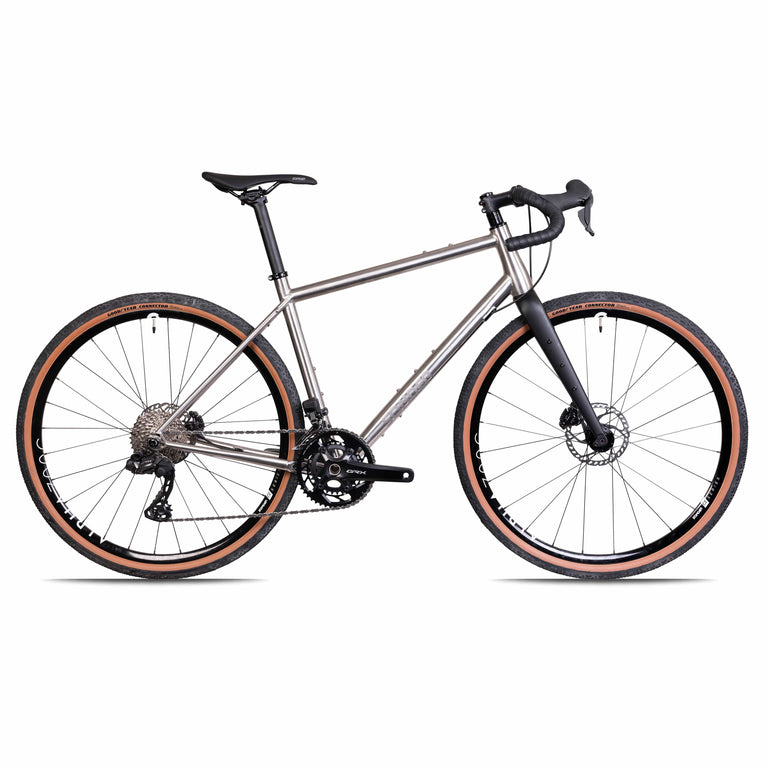

Camino Al Rival1 AXS XPLR
- SRAM Rival AXS XPLR 13-speed groupset
- Sonder Alpha I25 Gravel UK Made wheelset
£2,199.00
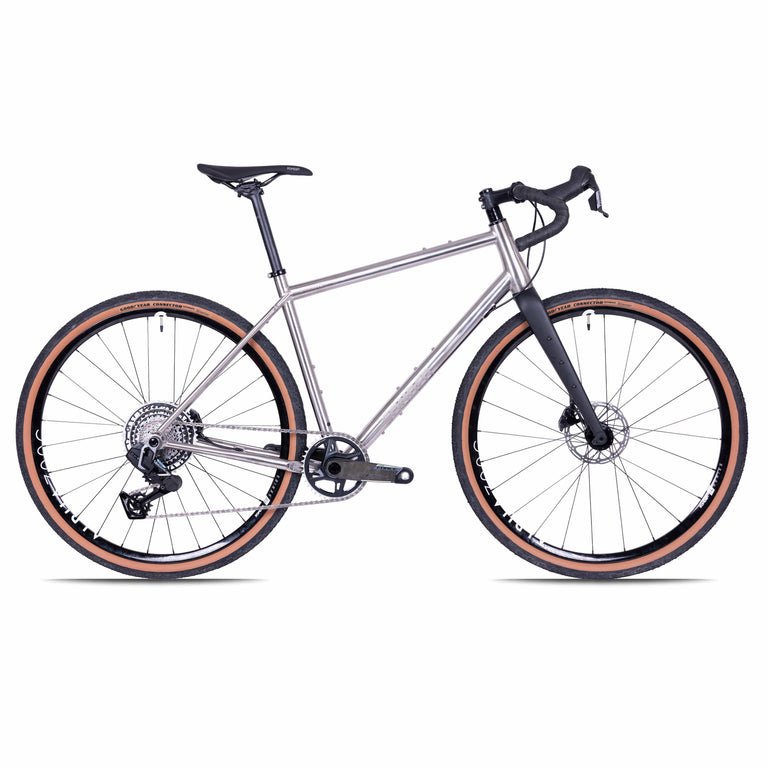
Camino Ti Force1 AXS XPLR
- SRAM Force XPLR 13-speed groupset
- Sonder Alpha I25 Gravel UK Made wheelset
£3,749.00
-
Flat Bar Best Seller

Camino Al Apex1 Flat Bar
- SRAM Apex 12-speed groupset
- Sonder Nova I25 Gravel UK Made wheelset
£1,199.00
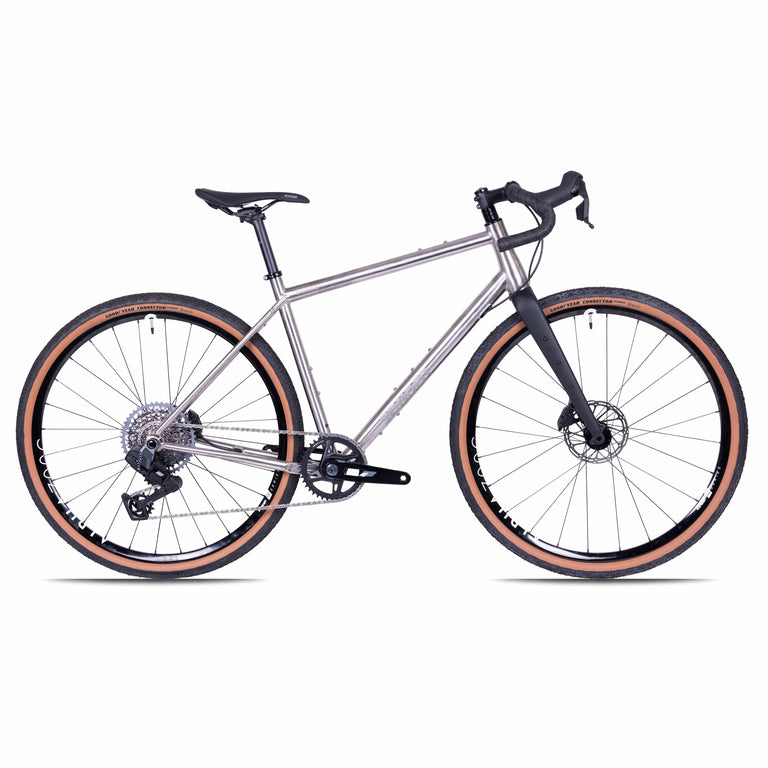
Camino TI Rival1 AXS XPLR
- SRAM Rival AXS XPLR 13-speed groupset
- Sonder Alpha I25 Gravel UK Made wheelset
£3,349.00
-
Top Spec


El Camino Force AXS XPLR Gen 2
- SRAM Force E1 Hydraulic
- Kynamic E-Drive System
- Sonder Alpha I25 Gravel UK Made wheelset
£3,799.00


El Camino Apex AXS XPLR Gen 2
- SRAM Apex AXS 12-speed groupset
- Kynamic E-Drive System
- Sonder Alpha I25 Gravel UK Made wheelset
£3,099.00
-
Flat Bar Best Seller


El Camino Apex1 Flat Bar Gen 2
- SRAM SX Eagle Trigger 12-speed groupset
- Kynamic E-Drive System
- Sonder Alpha I25 Gravel UK Made wheelset
£2,799.00
Your next reads