





 Sonder Bikes

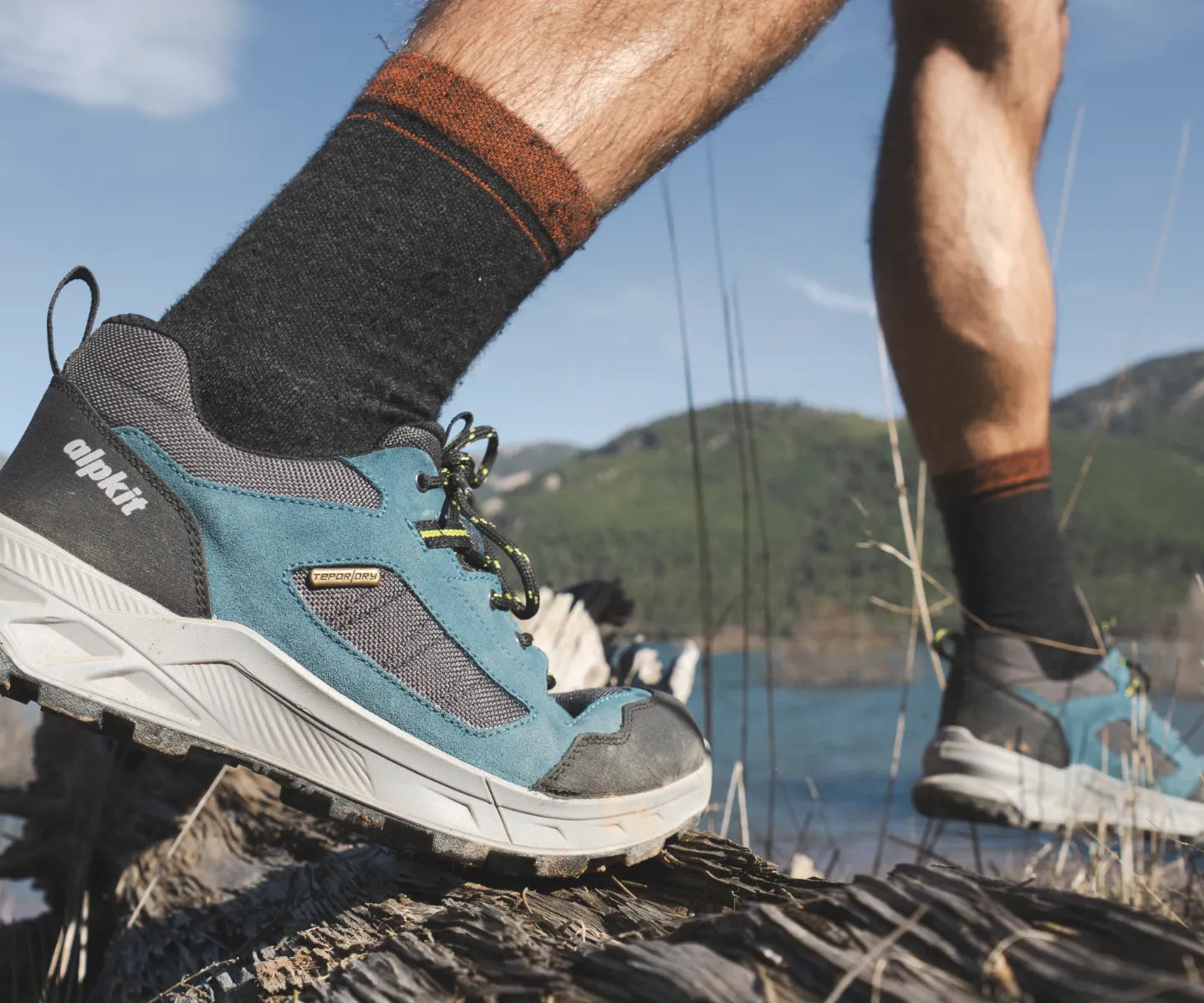
Do you need full walking boots for a summer day hike? Probably not. Here is when a lighter hiking shoe or approach shoe is the smarter choice, and when boots still win.
On most summer day hikes, a lighter shoe outperforms full walking boots. Less weight on your feet, better breathability, a more natural stride. Boots earn their place on multi-day trips with heavy packs, boggy ground, winter conditions, and routes involving snow or ice. For a dry summer day on well-graded terrain, they are often overkill.
This guide explains when lighter footwear wins, when boots are still the right call, and how approach shoes sit between the two. For wider hiking advice and gear guidance beyond footwear, visit the hiking hub.
Why lighter footwear wins in summer
Heat is the enemy on a warm day on the hill. Walking boots are built for all-weather performance, which means they are insulating, waterproof, and enclosed. In summer sun, that combination turns your feet into an oven. Hot feet stink.
A low-cut shoe with a breathable upper solves that problem. Air is pumped through the shoe as you walk. Your feet stay cooler and drier from sweat. Blisters, which often form where heat and moisture combine, become less likely.
Weight matters too. Every additional 100g on your feet costs more energy than the same weight in your pack. Think of a six hour walk, with perhaps 100 steps per minute, that's 36,000 repetitions of your foot lifting and accelerating that weight on the end of your foot. The cumulative effect is what you feel in your legs.
A lower cut, which simply means the height of the ankle is below your ankle bone, means more natural ankle movement. On straightforward terrain, your ankle works through a full range of motion with every step. A high cuff restricts that. Of course walking boots have a high cuff for a reason - they support and protect your ankles, but on easy paths, restriction does not protect you — it tires you.
When the logic breaks down: if you are carrying a heavy overnight pack, the added stability of a boot pays off. On boggy ground, a waterproof membrane earns its keep. On rough scree or loose terrain, a boot's stiffer sole and higher cuff protect the ankle from lateral rolls. And if you have a history of ankle injuries, that extra support is worth having regardless of the conditions. You have to be honest about your terrain and your body, not what best shows off your cool new socks.
From trail shoe to approach shoe to walking boot
The footwear we wear for hiking is not a binary choice between shoe and boot. There is a spectrum, and understanding where each type sits helps you pick the right tool for the job.
Trail and hiking shoes sit at the lightest end. Flexible, breathable, low to the ground. They are best suited to well-surfaced paths, gentle hills, and summer day hikes on known terrain. They offer the least underfoot protection and limited ankle support, so they need to be carefully matched to terrain.
Approach shoes sit in the middle. They share the low cut and light weight of a hiking shoe but are built to handle a wider range of terrain. A stickier rubber outsole grips rock confidently. A reinforced rand protects the upper and allows edging on small footholds. A firmer midsole manages rough, uneven ground without fatiguing the foot. They are the right choice for days that start as a hike and become something more technical: a rocky ridge, a scramble, a via ferrata approach.
Walking boots anchor the other end. Load-bearing stiffness, ankle support, and usually a waterproof membrane. They are built for multi-day trips, heavy packs, winter, and conditions where protecting the foot from the environment matters more than staying cool and nimble. There is a reason they remain the default for serious mountain walking. They are just not always the right default for summer.
For a full look at walking boots and how to pick the right pair, read our guide to how to choose walking boots.
Approach shoes: three things that set them apart
Three characteristics separate an approach shoe from a standard hiking shoe or trail runner.
Sticky rubber outsole: approach shoe outsoles use softer, higher-friction rubber than walking boot outsoles. On smooth or featured rock, the grip is significantly better. The trade-off is that soft rubber wears faster on abrasive ground, so approach shoes have a shorter lifespan than walking boots if used primarily on rough aggregate paths.
Rand: the rand is a rubber band that wraps around the toe. It protects the upper from rock abrasion and allows the shoe to edge on small footholds — a technique borrowed from climbing shoes. The rand is what gives an approach shoe its ability to function on technical terrain where a walking boot sole would slide.
Firm midsole with controlled flex: stiff enough for load-bearing on rough ground, with enough flex to walk comfortably over distance. Not as rigid as a walking boot, not as soft as a trail runner. It handles the approach and the scramble in the same shoe.
Hiking Shoes vs Walking Boots: When to Choose Which
This table compares approach shoes with standard walking boots across the terrain types you are likely to encounter.
| Approach Shoes | Walking Boots | |
|---|---|---|
| Summer day hike (well-surfaced path) | Excellent | Good (overkill) |
| On-trail walking (general) | Good | Excellent |
| Rocky scrambling | Excellent | Adequate |
| Technical rock / slab | Excellent | Poor |
| Snow and ice | Poor | Good (B1/B2) |
| Load carrying over distance | Adequate | Better |
| Boggy or wet ground | Poor (no membrane) | Good (with membrane) |
| Ankle support | Low to moderate | Moderate to high |
| Breathability | Better | Lower |
| Weight | Lighter | Heavier |
The approach shoe wins on technical rock and summer hiking comfort. The walking boot wins on load-carrying, wet conditions, and anything involving snow or ice. For many summer day hikers, the top row of that table is the one that matters most.
For routes in winter, or anything involving crampons, a boot with crampon compatibility becomes essential. See our guide to B1 and B2 mountaineering boots if that applies to you.
Our approach shoes
Two approach shoes cover different points on the spectrum.
Our El Chorro puts breathability first. No waterproof membrane, which means the upper breathes freely: exactly right for summer hikes and dry-day scrambles where cool feet matter more than wet-weather protection. A sticky REACT Grip outsole and reinforced toe rand handle edging and smearing on gritstone and limestone. Eight-point lacing locks the foot in place for precise footwork on rocky terrain. A PU midsole cushions long approaches without adding bulk.
It is the choice for summer hikes that tip into technical territory, or any day when you would rather have a cool, precise shoe than a warm, waterproof boot.
Men's El Chorro | Women's El Chorro
The Latitude sits in the gap most walkers know well: the days when you look at your boots and think they're more than you need, but you're not prepared to set off in a pair of trail runners and hope for the best. A waterproof shoe rather than a boot, lighter on the foot, but built with a split leather upper and Sympatex membrane that handles a proper day out in the hills.
Sympatex is worth a side note. It uses a hydrophilic construction rather than the microporous membranes you find in most waterproof shoes, which means it keeps breathing when conditions underfoot stay persistently wet. Your feet stay dry without the clammy feeling that builds up in shoes that don't breath.
It suits fast-moving days: long summer ridges, routes where the path is rougher than the map suggests, anywhere you want to cover ground without carrying unnecessary weight on your feet. Not a technical scrambling shoe, not a lightweight trainer. The choice for the majority of good days in the hills.
Men's Latitude | Women's Latitude
The Atlas is for when the pack gets heavier and the route gets longer. A mid-height walking boot with a supportive cuff around the ankle: the kind of boot you reach for when you're carrying kit for several days, crossing rough ground repeatedly, or heading somewhere where tired legs and loaded shoulders mean you want more underfoot than a shoe can give you.
The Tepor membrane uses the same hydrophilic construction as the Latitude: it keeps breathing in persistently wet conditions rather than trapping warmth once the rain sets in. The REACT Grip sole handles the variety of terrain a long route throws at you: wet moorland, rocky paths, boggy valley tracks.
It is built for the steady rhythm of long days on foot, routes where the mileage adds up and the boot needs to feel as reliable on the final descent as it did on the first climb.
Care and durability
Sticky rubber wears. It is the nature of the material. A few habits extend outsole life significantly.
Keep the outsole clean. Dust and grit embedded in the rubber kills friction and accelerates wear. Brush or rinse after use on gritty or dusty terrain. Store away from direct sunlight: UV degrades rubber compounds over time.
When the rubber becomes glazed and noticeably less grippy, it is time to either resole (possible with some brands and repairers) or replace. A glazed approach shoe sole on wet rock is a liability.