


 Sonder Bikes

How to Layer for Hot Summer Days: Staying Cool and Sun-Protected Outdoors
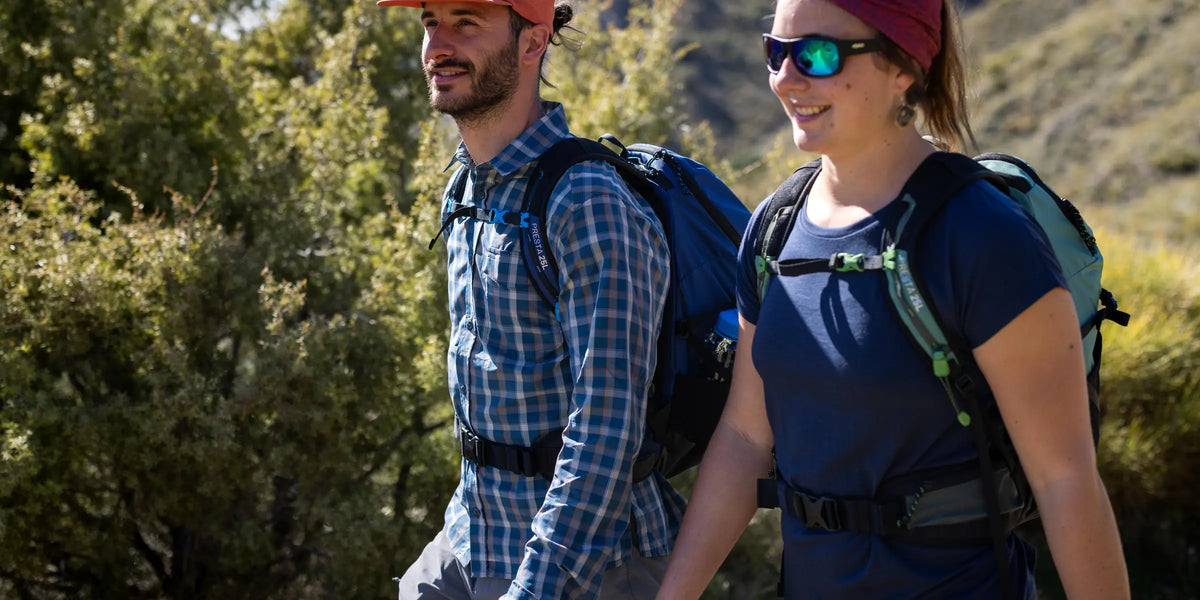



Wearing less isn't always the answer in summer. Learn how the right technical shirt and layers keep you cooler, safer, and sun-protected outdoors.
When the sun comes out, the instinct is to strip off. But if you're heading into the hills, traversing open ground, or spending time at altitude, less clothing is rarely the right answer. Whatever the season, our hiking hub has the wider guides on dressing right for the conditions.
The right layer keeps you cooler by managing airflow while blocking harmful UV rays. It protects your skin without trapping heat. And it moves with you rather than against you.
For a hot day on the hill, that means a loose, light technical shirt with a UPF rating, light trousers or shorts, a hat and sunglasses. Carry a windproof like the Arro (women's) for the summit or the evening. For the wider principles that apply across every season, see our complete guide to layering systems for hillwalking.
It sounds counterintuitive. But bare skin in direct sun absorbs heat. A well-designed shirt diffuses it.
A lightweight, breathable shirt creates a thin buffer of moving air between fabric and skin. In strong sun, that buffer can keep you cooler than bare skin in the same conditions. The fabric also intercepts UV radiation before it reaches you.
At altitude, UV increases significantly with every 1,000 metres you gain. Thinner air scatters less radiation. You burn faster, and the cumulative effect builds gradually, making it easy to dismiss until the damage is done. A summer day on the high tops without cover is a real long-term risk to your skin.
A technical summer shirt does several jobs at once. It manages heat, blocks UV, moves with your body, and stays comfortable across a long day.
A standard cotton shirt holds moisture, loses its shape and offers very little UV protection. A technical shirt is a fundamentally different piece of kit. Here's what separates a well-made outdoor shirt from a regular one.
Loose fit with articulated construction. Our shirts use a loose fit to encourage airflow across the body. The articulated cut means the shape stays consistent whether you're reaching overhead, crouching to pack your bag, or hiking under a rucksack. The fit moves with you rather than fighting you.
The collar as a sun shield. Worn up, the collar shields the back of the neck during sustained sun exposure. This is one of the most exposed areas on your body and one of the most overlooked. On a long, sunny ridge walk or an open bike route, it makes a real difference.
Dual-position cuff adjustment. Push the cuffs back when you need airflow. Fasten them down when the sun gets intense or the temperature drops. Simple, and far more useful than it sounds across a long day.
Practical features built into your shirt. The sunglasses slot on the chest pocket solves an irritating problem. When you're repeatedly moving between shade and open ground, having somewhere to clip your glasses without fishing in a pocket saves time and frustration.
When the sun is out and you're working hard, the starting point is simple: light, breathable, and fast-drying. Technical lightweight shirts are built for exactly this scenario. Made from synthetic fibres, they're lighter than most shirts, dry quickly after rain or a river crossing, and carry a UPF 50+ rating. They resist creasing, most have Polygiene odour control, and they're easy to rinse out and dry overnight on a multi-day trip. We choose fibres with a soft, cotton-like feel against the skin.
You'll find these in our men's shirts: Coruna, Aneto and Nevero with long sleeves, and Rocca and Tinto with short sleeves.
For days that start cold, Woodsmoke is the warmer choice. Its Thermocore polyester fibres trap air, which gives it a high warmth-to-weight ratio for chilly mornings and breezy ridges. The fabric is wicking and fast-drying, and the snap front opens quickly for venting when the sun comes out, so it copes when a cold start turns into a warm day.
It also has Polygiene odour control and an articulated fit that moves with you under a pack, which makes it a good shirt for a long trip in changing weather.
UPF stands for Ultraviolet Protection Factor. Think of it as the clothing equivalent of SPF in sun cream, applied to fabric.
A UPF rating of 50 means the fabric blocks around 98% of UV radiation. Only 1 in 50 UV rays passes through the material. That's meaningful protection across a full day outdoors.
Fabric construction drives this rating. Tightly woven synthetics, such as polyester and nylon, leave very little gap for UV to penetrate. Loose weaves and natural fibres like untreated cotton offer far less. A pale, untreated cotton shirt has very little UPF value at all.
Some fabrics are also treated during manufacturing to enhance their UV-blocking properties. Colour plays a role too: darker fabrics absorb more UV radiation, while lighter colours reflect more heat.
All our lightweight technical shirts are rated UPF 50+.
Shirts are the hero here, but UV protection runs through everything we design for summer use.
Swimwear. Our long-sleeved Hurley swim top (women's) and Dulsie swimsuit are rated UPF 50+. So while you're in and out of the water, your protection doesn't drop.
Wetsuits. A full wetsuit covers most of your skin, which counts on long days on the water where exposure adds up.
Legwear. Shorts are cooler, but long trousers keep the sun and scratches off your legs on long, exposed days. Our Teleki trousers (women's) use a lightweight woven fabric made for summer walking, and woven fabrics generally block more UV than knitted ones. The Teleki Short (women's) is the cooler option for lower, shadier routes. For high-altitude trekking or long days on open ground, pairing a UV-rated shirt with long trousers gives you consistent cover head to foot. See our guide to walking trousers for the full range.
One practical note: if you're using waterproof or DWR-treated items alongside sun cream or body oils, try to keep the two separate. Oils and creams can clog the breathable membrane and degrade the DWR treatment. If they do come into contact, wash the item promptly to restore its performance.
At 2,000 metres, UV exposure is roughly 20% higher than at sea level. At 3,000 metres, closer to 30% higher. Every 1,000 metres of altitude reduces atmospheric protection and increases the intensity of radiation reaching you.
For hillwalking, mountaineering, or any extended time on open high ground, this is a genuine concern. Cumulative exposure across a season or a lifetime of days in the hills adds up faster than most people realise. A well-rated shirt and the habit of keeping your collar up costs very little against that background.
The same logic applies when travelling. A technical shirt that packs small, dries quickly, and offers real UV protection earns its place in a travel bag. You're not carrying extra weight: you're replacing a less capable garment with one that does considerably more.
The right shirt depends on what you're doing and where you're doing it.
Choose from the lightweight range if weight and packability are the priority. Fast-drying, crease-free, and genuinely light. The UPF 50+ rating, and Polygiene® odour control on most of the range, make these the better choice for extended travel or humid conditions where you need to do more with less kit. For which shirt specifically, see our summer shirts buying guide.
Choose Woodsmoke if the day starts cold. It's warmer than the lightweight shirts, vents quickly through the snap front, and suits cross-season use or destinations where mornings are cool and the midday sun is strong.
For days on or in the water, protect yourself with a UV-protective Hurley, Dulsie or Nessie.
For days in the valley and on the hill, wear a technical shirt with long trousers, or a light base layer on its own: a lightweight merino or synthetic top copes with warm days too (see merino or synthetic base layers). The goal is consistent coverage across all exposed surfaces, from fabric you can trust across a long day.
And don't forget to lube up those remaining exposed areas.